
Body Composition 8 min read
Hand Grip Strength Normal Values in India: Cut-offs
Hand grip strength cut-offs (AWGS, EWGSOP2, Indian studies), typical values for Indian adults by age, and the protocol clinicians should use.
Reading about body composition? Find an InBody test centre near you →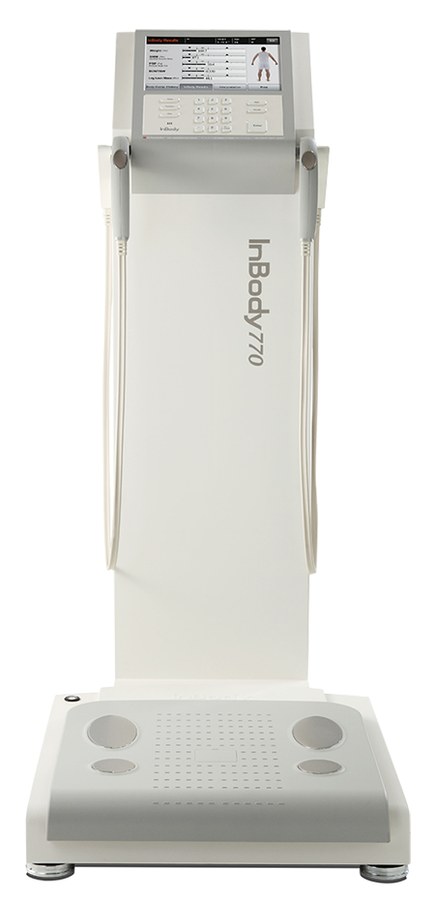
Hand Grip Strength Normal Values in India: Cut-offs, Norms and Protocol
For an Indian adult, hand grip strength below 28 kg in men or 18 kg in women counts as low muscle strength under the Asian Working Group for Sarcopenia (AWGS) 2019 criteria. An Indian community study proposed almost identical cut-offs of 27.5 kg and 18.0 kg. “Normal values” are a different question. Typical grip in healthy Indian adults is higher than these cut-offs and falls with age. This guide gives clinicians both sets of numbers, the measurement protocol behind them, and how grip fits with a body composition scan.
It is written for physicians, geriatricians, physiotherapists and dietitians. Every threshold below links to the paper it comes from. Where we could not check a number in the primary source, we say so.
“Normal” and “Low” Are Different Questions
Two kinds of number get mixed up in clinic conversations:
- Reference values (norms) describe what healthy people of a given age and sex typically score, usually as a median and a range. They tell you where a patient sits.
- Diagnostic cut-offs mark the point below which strength is called low for a sarcopenia work-up. They are usually set well below the average, often around two standard deviations below young adults.
A 55-year-old South Asian man gripping 30 kg is above the AWGS 2019 cut-off but slightly below the median for his age group in the data below. That is worth noting, not diagnosing.
Cut-offs for Low Grip Strength
| Source | Men | Women | Notes |
|---|---|---|---|
| AWGS 2019 | <28 kg | <18 kg | Asian consensus; used in most Indian studies |
| EWGSOP2 (Europe, 2019) | <27 kg | <16 kg | European reference populations |
| Chandigarh community study (2020) | <27.5 kg | <18.0 kg | 804 healthy Indian adults; 2 SD below young adults |
| Healthy donors and health workers (2022) | <25.63 kg | <16.7 kg | 514 Indians; 5th percentile; Smedley dynamometer |
The Chandigarh values have since been taken up by the South Asian Working Action Group on Sarcopenia (SWAG-SARCO) and by an Indian sarcopenia consensus published in 2025. The authors of the Chandigarh study found that prevalence estimates were higher when European cut-offs were applied, and concluded that indigenous rather than Western cut-offs should be used for Indians.
What about AWGS 2025?
The AWGS 2025 consensus update (Nature Aging, November 2025) extends sarcopenia diagnosis to adults aged 50 to 64 with “validated diagnostic thresholds”. It also requires low muscle mass and low strength together, with physical performance moved to an outcome measure. The numeric thresholds for the new age band are in the full paper, which is behind a paywall, and we could not verify them. Secondary summaries quote higher grip cut-offs for 50 to 64-year-olds, but please check the primary paper before you write them into a protocol. Our AWGS 2025 explainer covers the structural changes.
What Healthy Indian Adults Typically Score
The largest source for South Asia is the PURE study reference ranges (J Cachexia Sarcopenia Muscle, 2016). It measured grip with a Jamar dynamometer in healthy adults aged 35 to 70. Its South Asia group pooled India, Pakistan and Bangladesh. Median values, with the 25th to 75th percentile in brackets:
| Age | Men (kg) | Women (kg) |
|---|---|---|
| 35–40 | 35 (31–41) | 23 (19–27) |
| 41–50 | 33 (29–39) | 21 (18–25) |
| 51–60 | 31 (25–35) | 19 (16–23) |
| 61–70 | 27 (22–32) | 19 (15–23) |
Two things stand out. First, PURE found grip lowest in South Asia, South East Asia and Africa and highest in Europe and North America, and its authors advise interpreting a reading against region- and ethnicity-specific ranges. Second, the median for South Asian men aged 61 to 70 already sits just below the AWGS 2019 cut-off. That is a sign of how many older Indian men will screen as weak, not a reason to move the cut-off yourself.
An Indian study published in the Indian Journal of Gastroenterology (2024) tested 3,083 healthy individuals. It reported median grip of 34.95 kg in men and 25.50 kg in women, and noted that Indian muscle parameters were consistently lower than Western benchmarks. A 2026 pooled analysis of Asian reference values, which includes the Longitudinal Ageing Study in India, also found lower grip in South and Southeast Asia than in East and West Asia.
How to Measure Grip Strength So the Number Means Something
Protocol differences change the reading. A 2011 review in Age and Ageing found wide variation in equipment, posture, number of attempts and whether the best or average value was used. The most commonly cited reference posture comes from the American Society of Hand Therapists, as summarised in a 2024 methods review:
- Seat the patient in a chair without armrests, back upright, feet flat.
- Shoulder adducted and neutrally rotated, elbow flexed at 90 degrees, forearm in mid-position, wrist neutral (up to 30 degrees of extension).
- Squeeze as hard as possible for about three seconds. PURE used this instruction.
- Repeat. PURE took three attempts per hand with at least 30 seconds of rest and used the maximum.
- Record the hand, posture, device and the best value.
AWGS 2019 allows more than one protocol, including standing with the elbow extended. A 2023 study of 356 older adults found that the standing and seated methods gave clinically different values in about half of participants, but they did not significantly change who was classified as weak. They did change who was classified as asymmetric. The practical rule: pick one protocol, write it down and use it every time.
The dynamometer matters too. EWGSOP2 calls the Jamar hydraulic dynamometer validated and widely used, and says other brands are still being explored. Most published cut-offs came from a specific device. When you use a different dynamometer, use the same model for follow-up and treat cross-device comparisons with care.
Why Grip Belongs Next to a Body Composition Scan
A scan estimates how much muscle a patient has. A dynamometer tells you how well that muscle works. Both current Asian and European consensus statements need low strength, not only low mass, before a sarcopenia diagnosis, and AWGS 2025 requires both together.
Grip also carries prognostic weight of its own. In the PURE cohort of 139,691 adults across 17 countries, each 5 kg lower grip was linked to a hazard ratio of 1.16 for all-cause mortality. Grip predicted all-cause and cardiovascular death better than systolic blood pressure. That is an association. The authors note it is not yet shown that raising strength lowers mortality.
In practice the pairing catches patients one test would miss:
- Normal muscle mass, low grip: common in people with obesity, where mass looks adequate but function lags. See our guide to sarcopenic obesity criteria.
- Low mass, normal grip: worth watching and re-testing rather than labelling.
- Low on both: meets the core of the sarcopenia definition and warrants a fuller assessment.
For the mass side of the picture, our posts on skeletal muscle mass normal ranges and muscle mass testing in India explain the scan outputs.
Reading a Low Result in Clinic
- Rule out the obvious. Hand arthritis, a recent wrist injury, carpal tunnel symptoms or pain will lower grip without saying anything about whole-body muscle.
- Repeat on another day if the result is borderline.
- Add a chair-stand test and, where available, a muscle mass measure.
- Refer for nutrition review and supervised resistance training when strength is low. The AWGS 2025 update recommends resistance exercise combined with nutritional supplementation as the core intervention.
- Re-test with the same device and protocol to track change.
Grip is especially useful before planned surgery, where low preoperative strength has been linked to complications. Our post on prehabilitation and body composition before surgery covers that evidence.
Choosing a Dynamometer for Your Clinic
Look for a fixed handle position you can reproduce between visits, a clear digital readout and easy record-keeping. InBody’s InGrip handgrip dynamometer uses a load-cell sensor, measures from 1 to 100 kg in 0.1 kg steps, has a handle guide that keeps the handle at the same position for each user, and connects over Bluetooth. As with any non-Jamar device, keep the same unit for follow-up. Clinics adding grip to a sarcopenia or pre-operative pathway often pair it with a body composition analyser; see InBody for hospitals.
Frequently Asked Questions
What is a normal hand grip strength for an Indian man?
In the PURE study, median grip for South Asian men was about 35 kg at age 35 to 40, falling to about 27 kg at 61 to 70. For diagnosis, AWGS 2019 treats under 28 kg as low strength in men, and an Indian community study proposed under 27.5 kg.
What is a normal hand grip strength for an Indian woman?
PURE reported a median of about 23 kg for South Asian women aged 35 to 40 and about 19 kg after 50. Under AWGS 2019 and the Indian community study, below 18 kg counts as low strength.
Should I use AWGS or Indian cut-offs?
AWGS 2019 values are the most widely used in Indian research and are close to the Indian community-derived values for men (28 vs 27.5 kg) and identical for women (18 kg). Use one set consistently and state it in your notes. Check the AWGS 2025 paper for its separate thresholds in adults aged 50 to 64.
Dominant hand or both hands?
Protocols differ. PURE tested both hands three times and used the maximum from each. If you test only the dominant hand, record that, and keep the same approach at follow-up. Comparing hands is useful for spotting asymmetry, but the method you choose affects asymmetry results more than weakness results.
Is grip strength enough to diagnose sarcopenia?
No. Low grip alone may be labelled “possible sarcopenia” under AWGS 2019 for early intervention in community settings. A diagnosis needs low muscle mass as well, measured by DXA or bioimpedance.
Does grip strength fall with age in Indians?
Yes. An Indian community study found grip peaked in the third and fourth decades, and pooled Asian data show more favourable values in younger age groups than in older ones. That is why age-specific norms matter when you interpret a single reading.
Add Grip Testing to Your Assessment
If your clinic or hospital is building a sarcopenia, geriatric or pre-operative pathway, see the InGrip handgrip dynamometer or explore InBody for hospitals to pair strength testing with body composition. You can also request a demo and quote.
This article is for healthcare professionals and general education. It is not a substitute for clinical judgement or individual medical advice.
Related reading: sarcopenia in India and fitness after 60.

Most trending articles
Student Fitness Screening in India: A Guide for Schools
CBSE HPE, Fit India and Khelo India rely on BMI. How schools and colleges can add body composition screening safely, with child caveats and DPDP consent.
Creatine and Your Body Composition Scan: What Changes
Creatine raises body water and lean mass readings within a week on BIA and DXA. What the studies show and how to time your scans to read progress honestly.
Fitness Testing and Body Composition for Sports Academies
A practical fitness testing battery for Indian sports academies: body composition, grip, jumps, sprints, Yo-Yo, Khelo India context and youth maturation.