
Body Composition 8 min read
Muscle Mass Test: Names, Methods and Where to Get One
What the muscle mass test is called, how BIA, DXA, CT/MRI, tape and grip tests compare, how to prepare, and where to get a muscle mass test in India.
Reading about body composition? Find an InBody test centre near you →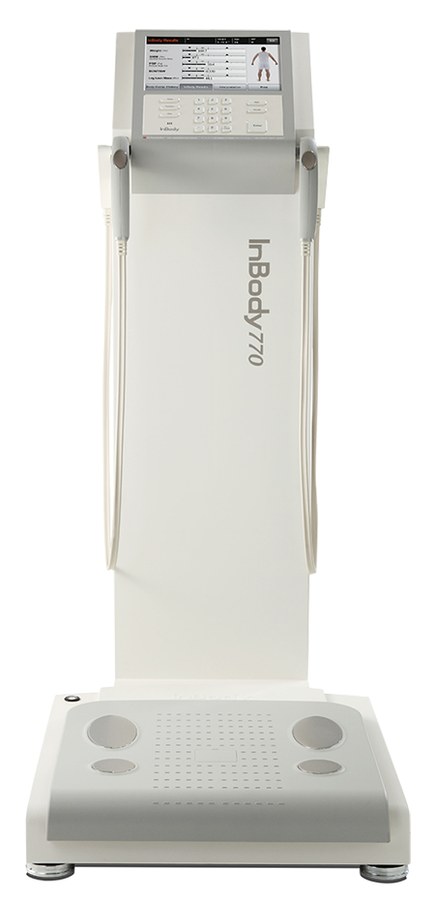
Muscle Mass Test: Names, Methods and Where to Get One
If you want a muscle mass test in India, the one you are most likely to be offered is a body composition analysis, often called a BCA test or BIA test. It takes about a minute, you stand barefoot on a machine holding two handles, and the printout gives your skeletal muscle in kilograms alongside your body fat. The other options are a DXA body composition scan at a diagnostic centre, CT or MRI in a hospital, simple tape measurements, and a grip-strength test that checks what your muscle can do rather than how much there is.
This guide explains what each test is called, what it actually tells you, how to prepare, and how to find one near you.
What Is the Muscle Mass Test Called?
There is no single lab test with the name “muscle mass test”. When you ask a clinic, gym or diagnostic centre, these are the names you will hear:
- Body composition analysis (BCA) or BIA test, short for bioelectrical impedance analysis. InBody is one brand of BIA analyser.
- DXA (or DEXA) body composition scan, sometimes called a whole-body DEXA. Not the same as the DEXA bone density test, though the machine is the same.
- Handgrip strength test, done with a dynamometer.
- CT or MRI muscle measurement, used mainly in research and specific hospital cases.
A routine blood report does not list your muscle mass. If you want to know how many kilograms of muscle you carry, you need one of the tests above.
The Five Ways to Check Muscle Mass, Compared
| Method | What it tells you | Where in India | Good for | Limits |
|---|---|---|---|---|
| BIA / body composition analyser | Skeletal muscle, fat, body water, segmental (arm, leg, trunk) estimates | Gyms, clinics, hospitals, dietitians, wellness centres | Quick checks and tracking change over time | Affected by hydration and test conditions; brands differ |
| DXA body composition scan | Lean mass, fat and bone by region | Larger diagnostic centres and hospitals | A detailed one-off measurement | Uses low-dose X-rays; fewer locations; brands differ |
| CT or MRI | Muscle area or volume at specific sites | Hospitals | Research and specific medical questions | Not a routine test; cost, access and, for CT, radiation |
| Tape measures (calf, arm) | A rough screening sign | Anywhere | Screening older adults | Not a measure of muscle mass in kilograms |
| Handgrip strength | Muscle strength, not mass | Clinics, physios, some gyms | Showing whether muscle is working well | Affected by hand pain, arthritis and effort |
1. Bioelectrical impedance analysis (BIA)
A small, painless current passes through your body. Muscle holds a lot of water and conducts well; fat conducts poorly. The device converts these readings into estimates of muscle, fat and water. The European sarcopenia consensus (EWGSOP2) is clear about the trade-off: BIA does not measure muscle directly but estimates it with equations calibrated against DXA, and it is affordable, widely available and portable. Estimates differ between brands, so stick to one device for follow-up.
On an InBody result sheet, the number to look at is skeletal muscle mass (SMM). Our guide to the SMM normal range on InBody explains how to read it.
2. DXA body composition scan
DXA uses low-dose X-rays at two energy levels to separate fat, lean soft tissue and bone, region by region. EWGSOP2 notes that it gives a reproducible estimate in a few minutes on the same instrument, but that different DXA brands do not give fully consistent results and that hydration can also influence it. It is a good choice if your doctor wants a detailed measurement.
3. CT and MRI
EWGSOP2 calls MRI and CT the gold standards for non-invasive assessment of muscle quantity. It also says they are not commonly used in primary care because of equipment cost, lack of portability and the need for trained staff. You would not book a CT just to check your muscle; it is more likely to come up when a scan done for another reason is also used to assess muscle.
4. Tape measurements
Calf circumference is a simple screen. The AWGS 2019 consensus uses a calf circumference below 34 cm in men and below 33 cm in women as one way to flag people who need further testing. EWGSOP2 adds a caution: anthropometry in general is not a good measure of muscle mass. Treat a tape as a prompt to test properly, not as the test.
5. Handgrip strength
Grip strength does not tell you how much muscle you have. It tells you how well it works, and that matters just as much. AWGS 2019 defines low strength as a grip below 28 kg in men and below 18 kg in women. A grip test plus a muscle mass measurement gives a far better picture than either alone. See our post on hand grip strength normal values.
Body Fat and Muscle Mass Test: Can One Test Do Both?
Yes. Both BIA analysers and DXA report fat and lean tissue in the same test. That is the main reason people choose them over a plain weighing scale: weight cannot tell you whether a kilogram lost was fat or muscle.
Be careful with the word “muscle” on different reports. Some devices print lean mass or fat-free mass, which includes body water, organs and bone. That is not the same as skeletal muscle. Our explainer on lean body mass vs muscle sorts out the terms.
Which Test Should You Choose?
- You want to know your starting point and track progress from training or diet: a BIA body composition test, repeated on the same machine every few weeks to months.
- You are over 60, or a parent is getting weaker: a body composition test plus a grip test, and a conversation with a doctor about the results.
- Your doctor wants precise regional data, or you are in a research or clinical programme: DXA.
- You are a clinician screening many patients: calf circumference or a questionnaire first, then a proper measurement for those who screen positive.
If you are deciding between a BIA test and DXA specifically, InBody vs DEXA vs caliper compares them side by side.
How to Prepare for a Muscle Mass Test
BIA readings respond to hydration, so test conditions matter. The basics:
- Avoid exercise before the test, and avoid unusually hard training the day before.
- Skip a heavy meal in the few hours before.
- Use the toilet just before testing.
- Drink normally. Do not load up on water or cut back.
- Test at the same time of day each time you want to compare results.
- Wear light clothing and remove metal accessories where practical.
Our full test preparation checklist has the details. If you have a pacemaker or other implanted electronic device, are pregnant, or have significant swelling, tell the centre in advance; our post on who should not take an InBody test explains why.
Where to Get a Muscle Mass Test in India
Body composition analysers are now common in gyms, physiotherapy and dietitian clinics, hospital wellness and endocrinology departments, and corporate health camps. InBody has 3,000+ installations across India.
- Use the InBody test centre finder to see centres near you.
- When you call, ask for the full result sheet, not just a verbal summary, so you can see skeletal muscle and fat separately.
- Ask whether the same machine will be available for your follow-up test.
The cost of a test varies by city and setting, so check with the centre when you book. Our page on the InBody test explains what the scan includes.
Frequently Asked Questions
What is the name of the test to check muscle mass?
The common name is a body composition analysis, also called a BCA or BIA test. Hospitals may also offer a DXA (DEXA) body composition scan. A grip-strength test checks muscle strength rather than mass, and is often done alongside.
How can I check my muscle mass at home?
Home body composition scales use the same impedance principle and are useful for watching trends if you test under the same conditions each time. A tape around the calf is a rough screening sign only. For a detailed reading, a professional analyser or DXA is more reliable.
Is there a blood test for muscle mass?
No routine blood test reports your muscle mass. Muscle is measured with body composition analysis, DXA, or imaging such as CT or MRI. Blood tests may help your doctor look for causes of weakness, but they do not replace a muscle measurement.
Which muscle mass test is most accurate?
MRI and CT are considered the reference methods but are not used for routine checks. DXA is a widely used detailed method. BIA is the most practical for regular tracking, and its results are most useful when you compare scans from the same device under the same conditions.
Can one test measure body fat and muscle mass together?
Yes. Body composition analysers and DXA scans both report fat and lean tissue in a single test. A weighing scale or BMI cannot separate the two.
How often should I test my muscle mass?
There is no fixed rule. Many people test at a baseline and then every one to three months while following a training or diet plan, on the same machine at the same time of day. Real muscle changes slowly, so weekly testing mostly shows water shifts.
Book a Muscle Mass Test Near You
Get your skeletal muscle, body fat and body water on one printout in about a minute. Find an InBody test centre near you, or read what the InBody test measures before you go.
This article is for general education and is not a substitute for medical advice. If you are losing strength or weight without explanation, see a doctor.
Related reading: how to choose a test centre and healthy waist size for Indians.

Most trending articles
Student Fitness Screening in India: A Guide for Schools
CBSE HPE, Fit India and Khelo India rely on BMI. How schools and colleges can add body composition screening safely, with child caveats and DPDP consent.
Creatine and Your Body Composition Scan: What Changes
Creatine raises body water and lean mass readings within a week on BIA and DXA. What the studies show and how to time your scans to read progress honestly.
Fitness Testing and Body Composition for Sports Academies
A practical fitness testing battery for Indian sports academies: body composition, grip, jumps, sprints, Yo-Yo, Khelo India context and youth maturation.