
Health 11 min read
Long COVID Muscle Loss: Why India’s “Recovered” Patients Are Still Weak [2026 Evidence]
24% of Indian COVID survivors report symptoms a year later. New clinical research shows real, measurable muscle loss behind the weakness — and how to track recovery.
Reading about body composition? Find an InBody test centre near you →![Long COVID Muscle Loss: Why India’s “Recovered” Patients Are Still Weak [2026 Evidence]](https://www.inbody.in/blog/wp-content/uploads/2026/08/long-covid-post-viral-muscle-loss-body-composition-india.jpg)
The Weakness That “Recovered” Doesn’t Explain
It’s a pattern clinicians and physiotherapists across India now recognise instantly. Someone had a genuinely serious bout of COVID-19 — maybe a hospital stay, maybe weeks in bed at home — and by every medical marker they have recovered. The test is negative, the chest X-ray is clear, the doctor has signed off. And yet weeks or months later, they are still winded climbing stairs they used to take two at a time, still exhausted after a short walk, still waiting for a strength that hasn’t come back. Family often suggests it’s “just stress” or “just tiredness.” It usually isn’t. What’s actually happening, in a measurable and well-documented number of cases, is post-viral muscle loss — a real, physical reduction in skeletal muscle mass that persists long after the virus itself is gone.
This isn’t a fringe theory. In one clinical study that tracked COVID-19 survivors for six months, those who lost the most muscle mass during the acute illness were far more likely to still be fatigued: 76% of the high-muscle-loss group reported ongoing fatigue at six months, compared with 46% of those who lost comparatively little muscle. The weakness people describe as vague or unexplained often has a specific, physical driver underneath it — and it’s one that can be measured and tracked, not just described in words like “tired” or “off.”
How a Viral Illness Turns Into Real, Measurable Muscle Loss
Muscle loss during and after a significant viral illness isn’t mysterious once broken into its parts. Three overlapping mechanisms are at work, all well established in clinical literature generated during and after the COVID-19 pandemic — precisely because so many people went through significant illness at once.
Inactivity and bed rest, which act faster than most people expect
Muscle is metabolically expensive tissue that the body actively maintains only when it is being used. Take away movement — through bed rest, hospitalisation, or simply being too unwell to be active — and muscle begins breaking down within days. Research on general bed rest and illness-related immobilisation has found declines of roughly 0.5–0.6% of muscle mass per day, with healthy young adults losing 1.7–4% of lower-limb muscle volume within just 2–5 days, and older adults losing as much as 5.5% in a single week. In hospitalised patients with more severe illness, the rate is faster still: a systematic review of 52 studies and over 3,200 critically ill patients found thigh muscle thickness declining by roughly 1.75–2.1% per day during the first week of critical illness, with nearly half of patients developing clinically significant weakness.
Inflammation and “anabolic resistance”
A significant viral illness also triggers a systemic inflammatory response that actively works against muscle maintenance. Research into post-COVID sarcopenia points to “anabolic resistance” — the body’s blunted ability to build and repair muscle in response to protein and movement, even once someone starts trying to rebuild. This is part of why recovery isn’t simply a matter of eating well and getting back to the gym — the body’s own muscle-building machinery is temporarily working against the person, not for them.
Severity and hospitalisation compound the damage
The more severe the illness, the worse the muscle picture tends to be. In a cohort of 530 people followed three months after moderate-to-severe COVID-19, 18.5% met criteria for sarcopenia overall — rising to 22.5% among those who needed invasive ventilation, versus 11.9% among those who didn’t. Low muscle mass was present in nearly a quarter of the group, and low muscle strength in close to half. Age above 60, obesity, and ventilation combined with a prolonged hospital stay were the strongest independent predictors — hospital stays for ventilated patients ran a median of 25 days, versus 9 days for the rest, and every extra day in bed adds to the deficit. This isn’t only a story about the sickest patients, though: adults recovering from mild-to-moderate, non-hospitalised COVID-19 have also shown measurably reduced muscle strength on standard clinical scales — improving significantly with a structured two-week rehabilitation programme.
Why “Recovered” Doesn’t Mean What Most People Assume
Here is the gap that causes so much confusion: medical “recovery” from a viral illness typically means the virus has cleared and acute symptoms — fever, cough, breathlessness at rest — have resolved. It’s a statement about the infection, not about your muscles. Functional and muscular recovery is a separate, slower process that standard post-illness follow-up rarely measures directly.
Most post-COVID medical follow-up in India understandably focuses on what caused hospitalisation in the first place: oxygen saturation, chest imaging, cardiac markers, blood counts. Skeletal muscle mass isn’t part of a routine check-up, and it’s rarely measured unless a patient is specifically referred into a rehabilitation programme. That gap matters, because the numbers suggest muscle loss is common rather than rare: sarcopenia has been documented in as many as 58% of patients entering post-COVID rehabilitation programmes in one hospital-based study, and a multi-centric Indian study following 315 patients across Vellore, Thiruvalla, Mumbai, and Hyderabad found 24% still reported at least one troubling symptom a full year after discharge, with muscle pain and weakness fluctuating throughout follow-up. A community-based study in rural Andhra Pradesh, surveying 500 survivors, found chronic fatigue affecting 21.4% — nearly 16 times more likely in those 60 and older, and nearly twice as common in women. None of these studies tracked muscle mass as the underlying cause; they tracked symptoms. The muscle loss driving many of those symptoms goes largely unmeasured in routine care.
What Tracking Skeletal Muscle Mass Actually Adds
“Do I feel tired” is a real signal, but an unreliable one to plan a recovery around — it’s shaped by sleep, mood, work stress, and motivation, not muscle status alone. Research has found muscle mass percentage is directly, negatively correlated with the severity of long COVID symptom scores: people with more preserved muscle mass tend to report fewer and milder ongoing symptoms. That’s exactly why an objective muscle measurement is useful alongside how someone feels, not instead of it.
This is where body composition tracking earns its place in a recovery plan — not as a diagnostic tool for long COVID itself, but as an objective marker of whether rehabilitation is working. In one structured six-week rehabilitation programme for post-COVID-19 syndrome, patients who completed physical training, education, and supervised exercise showed real, quantifiable change: skeletal muscle mass rose from an average of 23.2 kg to 24.2 kg, abdominal fat dropped, and six-minute walking distance improved from 320 metres to 382.5 metres. Those aren’t feelings — they’re numbers a patient, their doctor, and their physiotherapist could all look at together and agree the plan was working.
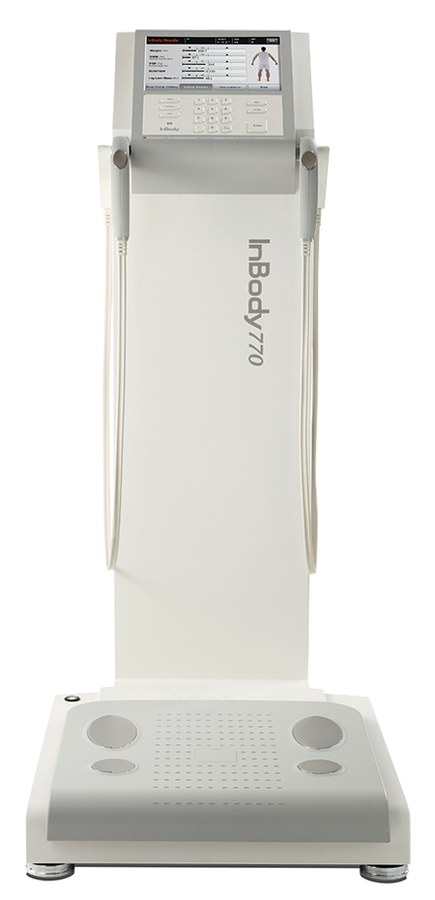
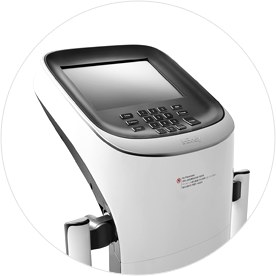
A bioelectrical impedance analysis (BIA) test — of the kind used in InBody testing — measures skeletal muscle mass directly, along with body fat and segmental distribution, in under five minutes. Repeated every few weeks through recovery, it gives a patient and their care team an objective trend line: is muscle mass climbing back toward baseline, holding steady, or still declining despite the person feeling “better”? That’s a complement to clinical judgement and physiotherapy assessment — not a replacement for either, and not a tool for diagnosing long COVID on its own.
A Practical, General Approach to Post-Viral Recovery
None of the following replaces medical or physiotherapy guidance specific to your situation — especially after hospitalisation, or with underlying heart, lung, or metabolic conditions. Treat it as general orientation to discuss with your doctor or physiotherapist, not a self-directed plan.
- Rebuild activity gradually, not all at once. Structured, progressive rehabilitation — light aerobic work, guided resistance exercise, and breathing training a few times a week — has shown measurably better outcomes than resuming a normal routine unsupervised. Too much too fast can worsen fatigue; too little for too long lets the deficit persist.
- Support recovery with adequate protein, spread across the day. Nutrition guidance for illness recovery generally points to 1.2–1.5g of protein per kilogram of body weight per day — meaningfully higher than typical sedentary intake. In an Indian diet, that means building meals around dal, paneer, curd, eggs, chicken, or fish rather than rice or roti alone, spread across three to four meals rather than one large serving at dinner.
- Involve a physiotherapist or doctor in a structured plan, especially after a hospital stay. Evidence consistently favours supervised, structured rehabilitation over generic advice to “take it easy” — programmes lasting just two to six weeks have produced measurable gains in strength, walking distance, and muscle mass over standard, unstructured recovery.
- Set realistic timelines based on how unwell you were. Meaningful strength gains have been documented within two weeks of a structured programme, with more substantial muscle mass and functional gains by six weeks. Recovery after ventilation typically takes considerably longer than recovery from a milder, non-hospitalised illness.
- Track progress with objective numbers, not just how you feel. A body composition test every few weeks during active recovery gives you and your care team a trend line for skeletal muscle mass — useful for confirming a plan is working, or flagging early that it needs adjustment.
- Know when to seek further medical evaluation. Persistent or worsening breathlessness, chest pain, palpitations, unexplained weight loss, or weakness not improving despite weeks of gradual, guided activity are reasons to see a doctor promptly rather than assuming it will resolve on its own.
Frequently Asked Questions
Can COVID-19 really cause measurable muscle loss, or is post-COVID weakness just fatigue?
It can be real and measurable, not just tiredness. Clinical studies have found sarcopenia (low muscle mass and strength) in 18–24% of patients three months after moderate-to-severe COVID-19, rising to as high as 58% among those entering post-COVID rehabilitation. The mechanism — inactivity during illness plus an inflammatory, muscle-catabolic state — is well documented.
I wasn’t hospitalised for COVID-19 — can I still have lost muscle?
Yes. A study of adults recovering from mild-to-moderate, non-hospitalised COVID-19 found measurably reduced muscle strength on standard clinical scales, improving significantly with a structured two-week rehabilitation programme. Hospitalisation raises the risk and severity of muscle loss, but it isn’t required for meaningful weakness to develop.
How much muscle can you actually lose from being sick in bed for a week or two?
More than most expect. General bed rest research shows declines of roughly 0.5–0.6% of muscle mass per day, with healthy adults losing 1.7–4% of lower-limb muscle volume within 2–5 days and older adults up to 5.5% in a week. In hospitalised patients with severe illness, thigh muscle can decline around 1.75–2.1% per day in the first week.
Why do I still feel weak weeks after my COVID-19 test came back negative?
Because “recovered” medically means the virus has cleared and acute symptoms have resolved — not that your muscles have finished rebuilding. That’s a separate, slower process standard follow-up rarely measures directly. Research also shows people who lost more muscle during acute illness are considerably more likely to still be fatigued months later.
Does long COVID specifically affect muscle mass, or is that a separate issue?
The two appear connected. Research has found muscle mass percentage is negatively correlated with the severity of long COVID symptom scores. In one six-week rehabilitation programme, patients who rebuilt skeletal muscle mass also showed parallel improvement in walking capacity, fatigue, and breathlessness — suggesting the two are linked, not coincidental.
Should I get a body composition test after a serious viral illness?
It’s a reasonable, low-burden option to discuss with your doctor. A BIA-based test measures skeletal muscle mass directly in under five minutes and can be repeated every few weeks to show whether muscle is genuinely returning to baseline. It complements clinical and physiotherapy assessment — it does not diagnose long COVID or replace a doctor’s evaluation.
How long does it typically take to rebuild muscle lost during a serious illness?
It depends on how unwell you were. Structured rehabilitation has shown measurable strength gains within two weeks and meaningful muscle mass and walking-distance gains by six weeks. Recovery after hospitalisation with ventilation generally takes longer, given the larger starting deficit — a physiotherapist or doctor can help set a realistic timeline for your case.
Track Your Recovery With Real Data, Not Just How You Feel
India recorded more than 44 million confirmed COVID-19 cases through the pandemic, and multi-centric Indian follow-up data shows roughly a quarter of survivors still carried at least one troubling symptom a full year later. A meaningful share of that lingering weakness has a physical, muscular basis that standard follow-up rarely measures — so it often goes unaddressed simply because nobody looked for it. This extends well beyond COVID-19: the same bed rest, inflammation, and deconditioning mechanisms play out after any serious viral illness that keeps someone down for an extended stretch.
If you or someone in your family had a significant viral illness and still doesn’t feel like themselves weeks or months later, the right first step is a conversation with your doctor or a physiotherapist about a structured recovery plan — this article is general information, not a diagnosis or treatment programme. Body composition testing is a useful complement to that plan: an objective skeletal muscle mass trend to track alongside clinical guidance, rather than relying on how tired you feel on any given day.
Hospitals and rehabilitation teams building objective muscle-mass tracking into post-viral recovery care can learn more at inbody.in/inbody-for-hospitals.php. Individuals can find their nearest test centre at inbody.in/inbody-test.php. Related reading: how sarcopenia accelerates muscle loss in Indian adults after 35, staying strong after 60, and how body composition tracking guides metabolic recovery in Type 2 diabetes.

Most trending articles
Hypothyroidism Symptoms in India: Signs Most People Miss
1 in 10 Indian adults has hypothyroidism, and it hides behind ordinary tiredness. The early signs most people blame on stress, age, or a new baby.
वज़न बढ़ाने के लिए क्या खाएं? सही डाइट प्लान (सिर्फ ज़्यादा खाना नहीं)
सिर्फ ज़्यादा खाने से मांसपेशी नहीं बनती, चर्बी बढ़ सकती है। सही कैलोरी सरप्लस, प्रोटीन और डाइट प्लान जो वज़न को सही तरीके से बढ़ाए — पूरी जानकारी हिंदी में।
भारत में प्रोटीन कितना ज़रूरी है? असली आंकड़े और सही फॉर्मूला
IMRB के एक सर्वे में लगभग 73% भारतीय आहार प्रोटीन-कम पाए गए। सही प्रोटीन टारगेट कैसे निकालें और किन फूड्स से पूरा करें — पूरी जानकारी हिंदी में।