
Fitness 10 min read
Monsoon Fitness in India: Why Humidity Cuts Workout Performance by Up to 16% [2026 Data]
Humidity alone can cut workout performance by 16%. Here's why Indian monsoons quietly reshape body composition — and how to catch the drift before January.
Reading about body composition? Find an InBody test centre near you →![Monsoon Fitness in India: Why Humidity Cuts Workout Performance by Up to 16% [2026 Data]](https://www.inbody.in/blog/wp-content/uploads/2026/08/inbody-270-body-composition-analyzer.jpg)
Every June, the Same Story Repeats
Through April and May, you found a rhythm — a 6 AM walk, a Saturday run, maybe an evening cycle once the sun dropped low enough to bear. Then the first heavy shower hit in June, and the rhythm broke. The park flooded. Your evening slot got swallowed by traffic that doubles the moment Mumbai, Delhi, Bengaluru, or Chennai gets even twenty minutes of rain. Somewhere between the rescheduled walks and the sudden craving for hot pakoras with evening chai, your monsoon fitness routine quietly stopped being a routine and became an intention — something you’ll “get back to” once the rain lets up.
If this sounds familiar, you are not undisciplined. You are responding to a real set of seasonal changes — in humidity, outdoor access, and the food environment around you — that most fitness advice never accounts for. Monsoon is not “summer with rain.” It works on your body through a different mechanism, and understanding it is the first step to not losing three to four months of progress every year.
Why Humidity Makes Every Workout Feel Harder (Even at the Same Temperature)
Most fitness advice conflates “hot” and “humid,” as if they were the same obstacle. They are not. A 33°C day in dry, pre-monsoon heat and a 33°C day in monsoon-soaked, saturated air place very different demands on your body, because heat and humidity affect performance through different mechanisms. We’ve covered how dry Indian summer heat affects walking and calorie burn before — monsoon adds a separate problem on top.
Most of the heat your muscles generate during exercise leaves your body through sweat evaporation — sweat that drips off unevaporated does little for core temperature. Evaporation depends on a pressure gradient between the vapour on your skin and the vapour already in the surrounding air. In dry conditions, that gradient is wide and sweat evaporates efficiently. In humid air — the default state of monsoon, with relative humidity commonly at 80–95% — the air is already near-saturated, the gradient narrows, and evaporation slows.
A 2025 study in the Scandinavian Journal of Medicine & Science in Sports (Bright, Clark, Jay & Périard) tested trained cyclists across four humidity levels at a constant 33°C, isolating humidity as the only variable. Performance was unaffected at low-to-moderate humidity, dropped roughly 5% at high humidity, and dropped roughly 16% at very high humidity — same temperature throughout. Sweating efficiency fell from about 50% to 16%, and average power output fell from 260 watts to 222 watts.
It isn’t only “how hot is it” that determines how brutal a workout feels — it’s how much room the air has left to absorb your sweat. Researchers capture this with Wet Bulb Globe Temperature (WBGT), and general exercise-safety guidance urges caution once WBGT climbs past roughly 29–30°C — a threshold monsoon afternoons cross easily, even on days that don’t feel as extreme as peak summer. Your workouts are genuinely harder in monsoon, at the same pace and a lower thermometer reading, than in summer. That is not a motivation problem. It is physics.
The Indian Monsoon Comfort-Food Pattern (And Why It Isn’t Just Willpower)
Ask almost anyone what monsoon tastes like, and the answer arrives instantly: pakoras, samosas, and chai. This is not a minor food preference — it is one of the most consistent, culturally embedded eating patterns in the country. The sound of rain, the smell of hot oil, and the first sip of ginger chai are so tightly linked in Indian sensory memory that the craving becomes close to automatic.
The food math is worth real numbers. A single onion or vegetable pakora typically runs 60–120 kcal, with roughly 5g of fat in just two pieces. A samosa is denser: a standard restaurant-size samosa weighs 40–50g and delivers 170–220 kcal, with 8–12g of fat, almost entirely from oil absorbed during deep-frying. Three pakoras and a samosa with evening chai — an ordinary monsoon snack plate — adds roughly 500–650 kcal and 35–45g of fat before dinner has even started.
That would be manageable as an occasional indulgence. The problem is frequency, paired with a genuine drop in activity. Analysis of fitness-app engagement in India shows a consistent seasonal curve: activity dips through monsoon and rebounds sharply in September, once rains ease. A walk or gym session means navigating flooded streets and traffic that doubles the moment rain starts, so many people simply wait it out, while the snack plate keeps arriving several times a week for months straight. Monsoon is also India’s peak season for viral infections, and even a mild flu independently knocks out training on top of the rain and the cravings.
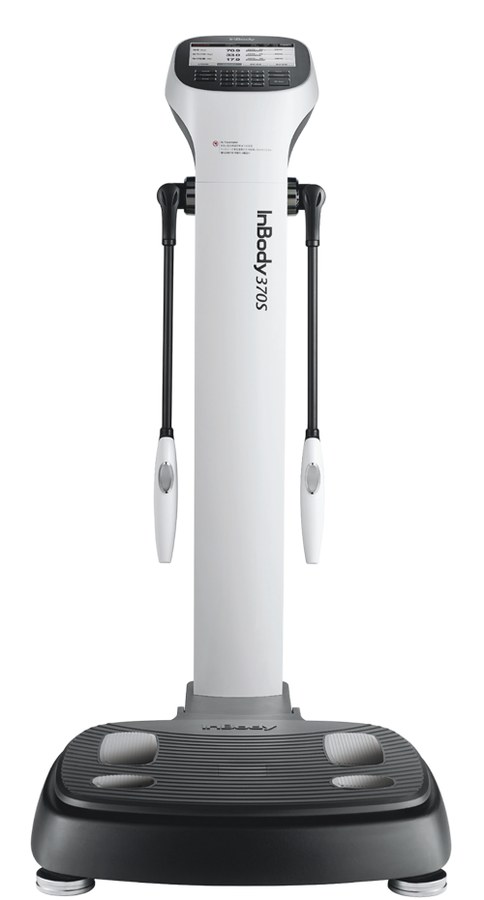
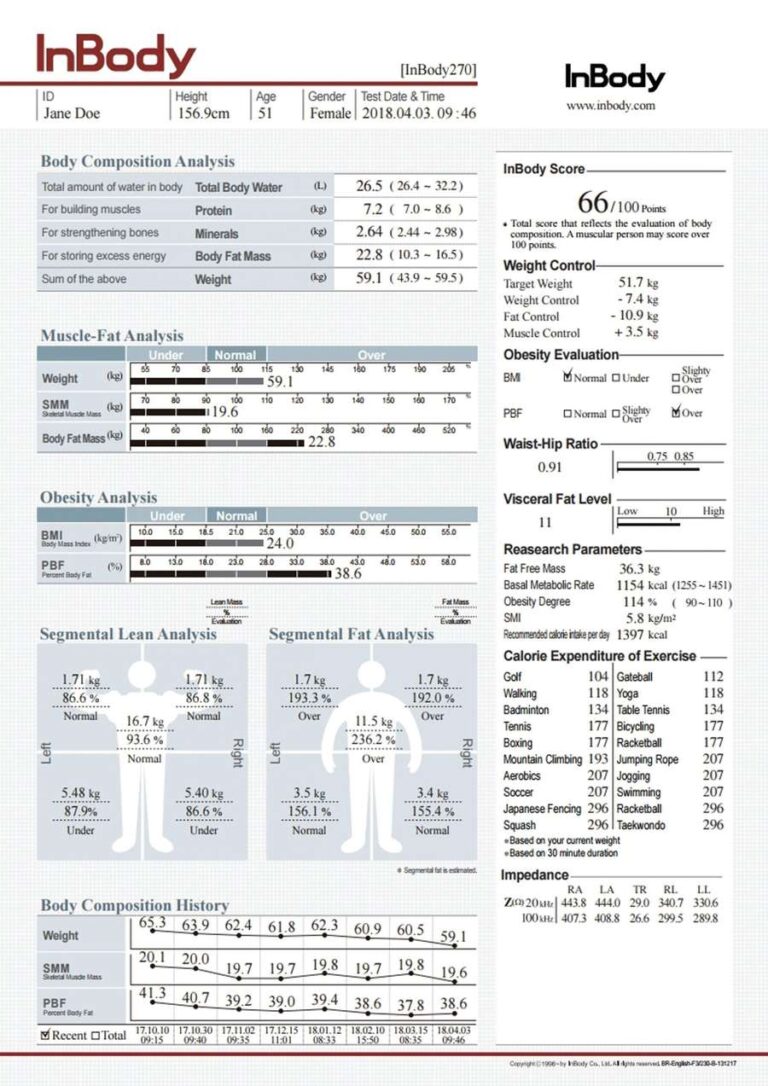
Why This Shows Up on Your InBody Report Before It Shows on the Scale
Here is the part that catches most people off guard: three to four months of “I’ll get back to it once the rain stops” rarely shows up as a dramatic change on the scale. A few hundred extra calories a few times a week, plus a genuine drop in activity, produces a slow drift, not a spike. Weight might move a kilogram or two, or not at all, since fluid retention — more common in humid weather — can mask a real underlying change.
Body composition doesn’t hide the same way. Percent body fat and visceral fat area respond to a sustained shift in energy balance well before total body weight does, because muscle, water, and fat can move in different directions at once, cancelling out on a scale that reports one combined number. Someone lean and active through April and May can genuinely gain visceral fat over monsoon without ever seeing an alarming number on the scale, simply because their weight’s composition changed even when the total barely did.
This is why waiting for a January “new year reset” is the wrong instinct here. By January, a monsoon-season shift has had four to five extra months — through Navratri, Diwali, and winter festivities — to compound. Testing at the end of monsoon tells you specifically what changed: fat gain, water retention, or a genuine loss of muscle. A scale cannot make that distinction. A body composition test can.
Joints, Humidity, and Why Some People Feel It More
Reduced outdoor activity during monsoon isn’t only about rain and traffic — for many people, it’s also physical discomfort. Rising humidity and falling barometric pressure can cause tissues around joints to retain fluid and expand slightly, increasing pressure on nearby nerves and worsening inflammation in people already prone to it. Hospital-published analyses of Indian arthritis patients report that roughly two in three notice increased stiffness during monsoon, and most also cut back on daily activity because of it. You don’t need diagnosed arthritis to notice a milder version — general stiffness and lower motivation to move are common, low-grade monsoon complaints too.

6 Monsoon-Adapted Fitness Strategies That Actually Work
- Build a genuine indoor backup, not just an excuse to skip. Have an indoor plan ready before the rain forces the issue. A structured bodyweight or resistance routine, done consistently at home, maintains muscle mass and body fat percentage as effectively as outdoor training. Our home-workout protocol lays out a full zero-equipment plan for exactly this.
- Use the rain radar, not the clock. Check a rain-radar app the night before and that morning instead of fixing an exact time. Monsoon rain arrives in bursts with real dry windows between them, and mornings before roughly 8 AM tend to have the lowest rain probability in most Indian cities.
- Swap the fry, keep the ritual. You don’t need to give up pakoras and chai — portion and preparation matter more than avoidance. Air-frying or baking instead of deep-frying cuts calories and fat by roughly 20–40%. Pair with protein, and keep chai sugar in check as covered in our piece on chai, mithai, and visceral fat.
- Adjust hydration for humidity, not just heat. Sweat that drips rather than evaporates makes it easy to underestimate fluid loss — you feel less parched than in dry heat, even while sweating heavily. Drink on a schedule rather than waiting for thirst.
- Protect sensitive joints with lower-impact indoor options. If you notice more stiffness during monsoon, shift toward bodyweight strength work and mobility drills rather than high-impact running on wet, uneven surfaces.
- Anchor two sessions a week that don’t depend on the weather. Pick two fixed slots — home training, a covered gym, an indoor class — that happen regardless of rain, and treat outdoor activity as a bonus, not the whole plan. This usually separates people who maintain body composition through monsoon from those who lose the season.
Test at the Start of Monsoon, Not Just at New Year
Monsoon in India lasts three to four months — long enough for a “wait it out” pattern to become a genuine, measurable shift in visceral fat and body fat percentage, even while your scale insists nothing has changed. The fix isn’t willpower alone; it’s the same thing that works every season — structured activity you can sustain when the weather doesn’t cooperate, smarter rather than eliminated snacking, and real data instead of guesswork.
Book an InBody test at the start of monsoon and again as the rains ease, and let your body composition report — not the rain outside your window — tell you what’s actually changing. Find your nearest InBody test centre and book a test.
Related Reads
- 10,000 Steps a Day in India: Does It Actually Work for Fat Loss?
- Body Recomposition Without a Gym: The Indian Home Workout Protocol
- India’s Sugar Problem: How Chai, Mithai, and Hidden Sugar Are Destroying Your Visceral Fat Numbers
Frequently Asked Questions
Why do I feel less fit during monsoon even though I haven’t stopped exercising?
Because humidity, not just temperature, makes your body’s cooling system less efficient. Sweat that can’t evaporate in saturated monsoon air doesn’t cool you, so your heart rate and perceived effort climb faster for the same pace. Research shows very high humidity can cut exercise performance by roughly 16% at an unchanged temperature. You’re not less fit; the environment is working against you.
Does humidity really burn fewer calories than dry heat?
Not for identical effort — but most people unconsciously slow down or shorten sessions in humid conditions because the same pace feels harder, reducing total calories burned per session. The honest fix is adjusting intensity or duration so you sustain a consistent routine through the season, instead of quitting after a few brutal sessions.
What is the best time to exercise outdoors during monsoon in India?
Early morning, typically before 8 AM, tends to have the lowest rain probability and comparatively cooler, though still humid, air in most Indian cities. Check a rain-radar app the night before and again that morning rather than fixing a clock time — monsoon rain arrives in bursts with genuine dry windows between them, and a flexible buffer makes a dry gap easier to find.
Why do joints hurt more during monsoon season?
Rising humidity and falling barometric pressure can cause tissues around joints to retain fluid and expand slightly, increasing pressure on nearby nerves. Hospital-published analyses of Indian arthritis patients report that roughly two in three notice increased stiffness during monsoon, and most also report reducing daily activity because of it. Gentle mobility work and lower-impact indoor training help maintain activity without aggravating sensitive joints.
How can I cut down pakora and chai cravings during monsoon without giving them up completely?
You don’t need to eliminate them — portion and preparation matter more than total avoidance. Air-frying or baking instead of deep-frying cuts calories and fat by roughly 20–40%, and pairing one or two pieces with protein slows the “just one more” cascade. Keeping the ritual — hot snack, hot chai, rain outside — while changing the execution is more sustainable than skipping it entirely.
Can home workouts fully replace outdoor exercise during monsoon?
For body composition purposes, yes. Muscle and fat respond to training stimulus and energy balance, not to where the workout happened. A structured bodyweight or resistance routine done consistently indoors for three to four months maintains or improves muscle mass and body fat percentage as effectively as outdoor training — consistency is the deciding factor, not location.
How often should I check my body composition during monsoon season?
Testing at the start of monsoon and again around September or October gives you a clean before-and-after picture of exactly what changed — fat, muscle, or water — over a season most routines quietly slip in. Catching a drift at the two- or three-month mark is far easier to correct than discovering it during a January reset.

Most trending articles

वज़न बढ़ाने के लिए क्या खाएं? सही डाइट प्लान (सिर्फ ज़्यादा खाना नहीं)
सिर्फ ज़्यादा खाने से मांसपेशी नहीं बनती, चर्बी बढ़ सकती है। सही कैलोरी सरप्लस, प्रोटीन और डाइट प्लान जो वज़न को सही तरीके से बढ़ाए — पूरी जानकारी हिंदी में।
भारत में प्रोटीन कितना ज़रूरी है? असली आंकड़े और सही फॉर्मूला
IMRB के एक सर्वे में लगभग 73% भारतीय आहार प्रोटीन-कम पाए गए। सही प्रोटीन टारगेट कैसे निकालें और किन फूड्स से पूरा करें — पूरी जानकारी हिंदी में।
Weight Loss या Fat Loss: असली फर्क क्या है?
वज़न घटना और चर्बी घटना एक चीज़ नहीं है। तेज़ी से वज़न घटाने पर मांसपेशी क्यों चली जाती है, और असली फर्क कैसे पता करें — हिंदी में पूरी जानकारी।