
Body Composition 10 min read
India’s Obesity Ranking: Why Standing at #180 Globally Still Adds Up to a Health Crisis
India ranks 180th globally for obesity rate, yet has 101 million diabetics. The real reason: BMI misses India's 'thin-fat' body fat pattern entirely.
Reading about body composition? Find an InBody test centre near you →
India’s Obesity Ranking: Why Standing at #180 Globally Still Adds Up to a Health Crisis
Search “India’s obesity ranking” and the first surprise is how low the number actually is. By the World Health Organization’s standard yardstick, India isn’t anywhere near the top of the world obesity charts — it sits closer to the bottom, ranked 180th out of roughly 200 countries for men and 182nd for women. And yet India is also home to one of the largest diabetic populations on Earth, a cardiovascular disease epidemic that hits people a decade earlier than in Europe, and a body-fat pattern researchers have nicknamed “thin-fat.” A country that barely registers on the global obesity leaderboard is quietly carrying some of the world’s heaviest metabolic disease burden. That gap between the ranking and the reality is not a contradiction — it’s a measurement problem, and understanding it changes how you should think about your own risk.
Where India Actually Stands on the Global Obesity Charts
The most rigorous international comparison of obesity comes from the NCD Risk Factor Collaboration (NCD-RisC), a global research network whose data was published in The Lancet in 2024 as part of a pooled analysis of 3,663 population studies covering 222 million people across roughly 200 countries and territories. On that ranking, using the standard global obesity threshold of BMI 30 and above, India’s age-standardised obesity prevalence in 2022 was 5.4% among men and 9.8% among women — placing the country 180th and 182nd respectively, among the lowest quintile of nations measured.
Set that against a few reference points. The World Health Organization put global adult obesity prevalence at roughly 16% in 2022, meaning India’s rate sits well below the world average. The United States, by comparison, recorded adult obesity of 40.3% in the CDC’s most recent NHANES survey (2021–2023) — nearly four times India’s rate. Gulf states rank even further out on the curve: Kuwait and Saudi Arabia placed among the world’s top five countries for female obesity prevalence in the World Obesity Federation’s 2024 Atlas, with more than three-quarters of Saudi women classified as overweight. China, despite its population size, also posts a low national rate — commonly cited around 6% — putting it in similar territory to India on a percentage basis.
| Country / region | Adult obesity rate | Context |
|---|---|---|
| India — men | 5.4% (2022) | 180th of ~200 countries, NCD-RisC |
| India — women | 9.8% (2022) | 182nd of ~200 countries, NCD-RisC |
| Global average | ~16% (2022) | WHO |
| China | ~6% (national) | Similar percentile to India |
| United States | 40.3% (2021–23) | CDC NHANES |
| Kuwait / Saudi Arabia (women) | Among world’s top 5 | World Obesity Atlas 2024 |
So the raw rate-based ranking is genuinely low. But rankings by percentage can hide a second, very different ranking: raw population count. Because India has 1.4 billion people, even a “low” prevalence rate translates into an enormous number of individuals. The NCD-RisC data puts the actual count at 70 million Indian adults living with obesity in 2022 — 44 million women and 26 million men — and a separate analysis places India third in the world for absolute number of adults with obesity, behind only China and the United States. Widen the lens to overweight-plus-obese combined, and India held roughly 180 million people in that category in 2021, again ranking second globally by sheer numbers, behind China’s 402 million and ahead of the US’s 172 million. Two rankings, two very different stories — and neither one is telling you the part that matters most for your own health.
The Part the Ranking Doesn’t Show: India’s “Thin-Fat” Problem
Here is the piece that international obesity league tables consistently miss, and it’s the real reason “India’s obesity ranking” is a misleading number to fixate on: the BMI 30 threshold that defines “obese” in every global comparison was calibrated on European body composition data. It was never built for how South Asian bodies store fat — and the mismatch is large enough to change the entire picture.
The clearest evidence comes from a UK Biobank study of nearly half a million participants, published in Diabetes Care. Researchers found that South Asians reach the same diabetes risk at a BMI of just 22 kg/m² that white Europeans reach at a BMI of 30 kg/m² — the exact cutoff used to define “obese” in every global ranking discussed above. In other words, a large share of Indians who are metabolically in the danger zone are, by definition, invisible to the statistic that produces India’s 180th-place ranking.
This is the “thin-fat” phenotype — a term researchers use for people who look average or even slim by weight and BMI, but who carry a disproportionate share of visceral fat around their abdominal organs, with comparatively little of the subcutaneous fat that cushions under the skin in other populations. A national review of India’s obesity burden estimates the thin-fat pattern affects roughly 32% of Indian adults. Reference textbooks on the phenomenon (the Endotext chapter on “Thin Fat Obesity”) describe the underlying mechanism plainly: South Asians have a lower capacity to store excess energy safely as subcutaneous fat, so once that limited storage is exceeded, fat spills over into visceral and organ-adjacent depots — at a body weight that would look unremarkable on a scale.
The downstream consequence shows up everywhere in India’s disease data. The ICMR-INDIAB national study — one of the largest metabolic surveys ever conducted, screening over 113,000 people — found 101 million Indians already living with diabetes and another 136 million with prediabetes, an overall weighted diabetes prevalence of 11.4%. Cardiovascular disease follows the same pattern: research published in The Lancet Regional Health – Southeast Asia found Indians develop cardiovascular disease roughly a decade earlier than Europeans, with 52% of India’s CVD deaths occurring before age 70, compared with 23% in Western populations. None of that disease burden shows up in a ranking built around a BMI cutoff that wasn’t designed for Indian bodies in the first place. If you instead measure obesity using India’s own clinical threshold — obesity beginning at BMI 25, not 30 — the counted population jumps from roughly 70 million to an estimated 254 million people, more than three times higher. Same country, same year, three very different rankings, depending entirely on which line you draw. We’ve written in detail about why India uses lower BMI cutoffs than the rest of the world, and the same underlying biology explains why so many “normal weight” Indians are living with what researchers call hidden or “skinny fat” obesity.
Is India’s Position Rising? The Trend Line Is Unambiguous
Whatever definition you use, the direction of travel is the same: up, and fast. NCD-RisC’s trend data shows Indian women’s age-standardised obesity prevalence rose from 1.2% in 1990 to 9.8% in 2022 — roughly an eightfold increase — while men’s prevalence climbed from 0.5% to 5.4%, more than a tenfold rise. Government survey data tells a similarly steep story at the population level: comparing the National Family Health Survey rounds from 2005–06 to 2019–21, UNICEF India reported that adult obesity prevalence rose 91% among women and 146% among men over that period, with under-five overweight up 127% and adolescent obesity rising 125% in girls and a striking 288% in boys.
Three forces are driving that climb. The first is urbanisation: NFHS-5 data shows overweight-and-obesity prevalence running at 31–36% in urban India versus 18–21% in rural areas, as city living replaces physical routines with sedentary commutes and desk jobs. The second is diet. India’s ultra-processed food market grew from roughly USD 900 million in 2006 to USD 37.9 billion in 2019, with retail sales of packaged, energy-dense foods growing at 13.7% annually through the 2010s, steadily displacing traditional, less processed eating patterns. The third is simply time and momentum — a young population is moving through the same lifestyle transition that pushed obesity rates higher in Gulf states and East Asian cities a generation earlier, only compressed into a shorter window. Forecasting models built on this trajectory project India’s overweight-and-obese population could reach roughly 450 million by 2050, keeping it among the two or three largest such populations in the world even as its percentage-based rank likely continues to climb the international table.
Why Your Own Body Composition Matters More Than Any National Ranking
Here’s the practical takeaway underneath all of this: national rankings, whichever version you look at, describe a population of 1.4 billion people. They cannot tell you anything about the one body you actually live in. India’s low percentage-based obesity rank might make an individual reader feel reassured — “we’re not even in the top half of the world” — while the thin-fat data says the opposite might be true for that specific person, especially if their weight and BMI look “fine” on paper.
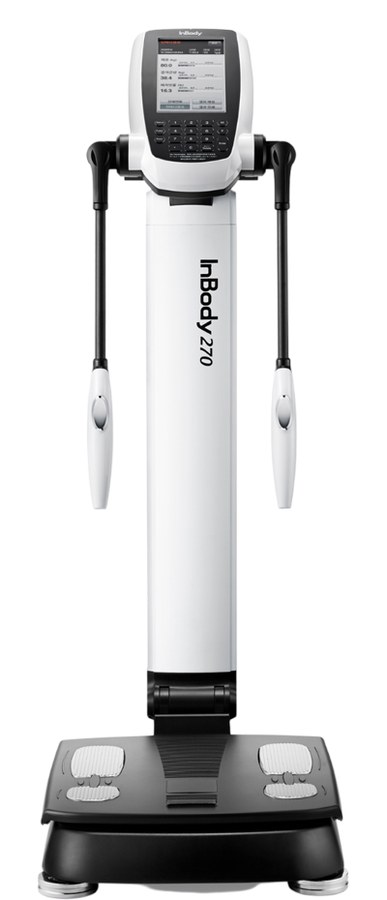
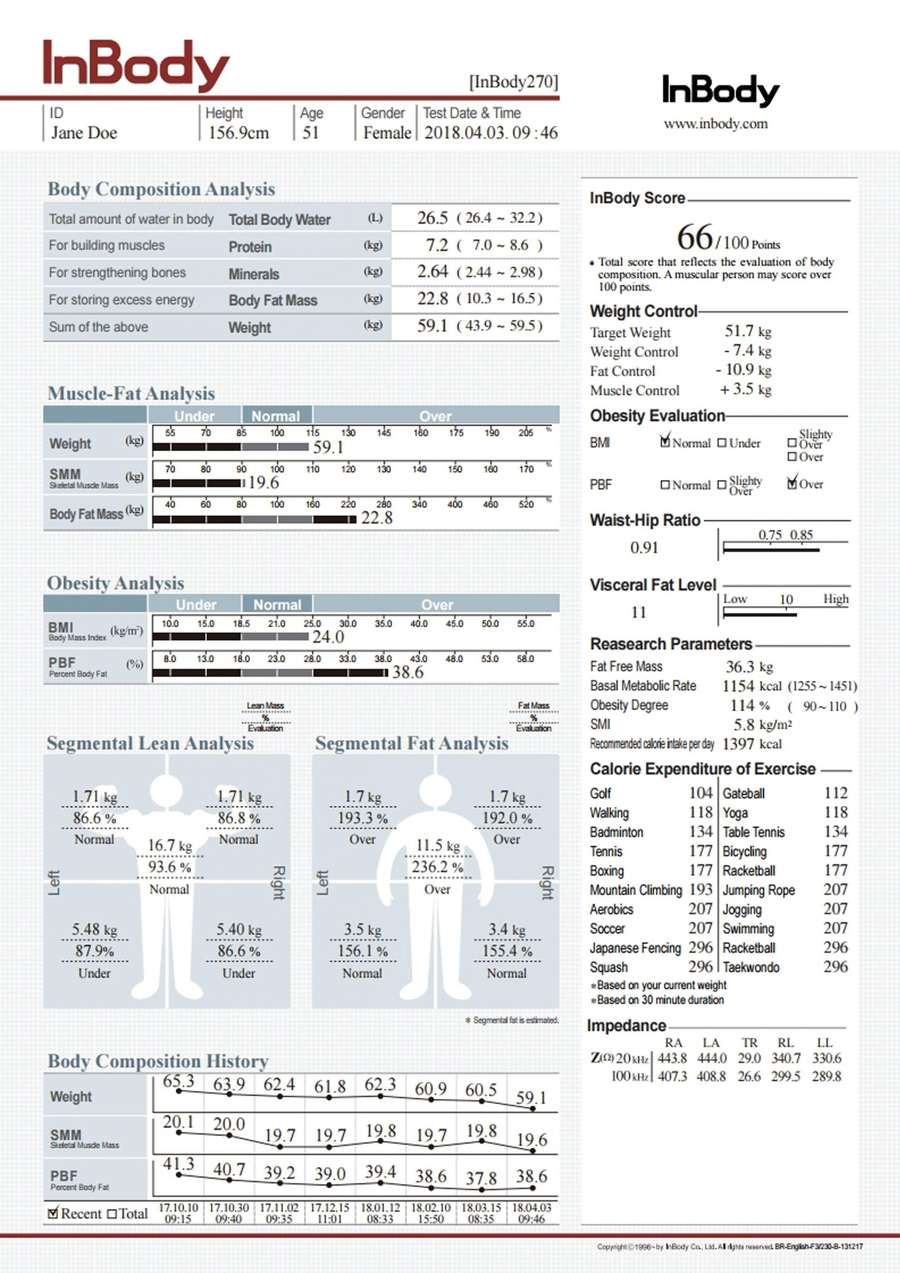
This is exactly why body composition testing exists as a category separate from BMI and separate from population statistics. An InBody test doesn’t compare you to 200 countries or to a global average — it measures your own Skeletal Muscle Mass, your Percent Body Fat, and critically, your Visceral Fat Area, the single number closest to what actually drives diabetes and cardiovascular risk in Indian bodies. A Visceral Fat Area above 100 cm² is treated as a clinical risk threshold regardless of what your BMI or the scale says, and it is entirely possible — common, in fact, in the Indian population — to cross that threshold while still being classified as “normal weight” by every metric that feeds into the international rankings discussed above.
In other words: knowing that India ranks 180th in the world for obesity tells you almost nothing useful about your own risk. Knowing your own Visceral Fat Area, muscle mass, and body fat percentage tells you everything the national ranking was never designed to reveal.
Frequently Asked Questions
What is India’s rank in global obesity statistics?
By the standard global obesity measure (BMI 30 or above), India ranked 180th out of roughly 200 countries for men and 182nd for women in 2022, according to NCD-RisC data published in The Lancet — among the lowest percentage-based rates in the world. But because of India’s population size, it ranks third globally for the raw number of adults living with obesity, at roughly 70 million people.
Why does India have a low obesity rate but a high diabetes rate?
The global BMI 30 obesity threshold was calibrated on European body composition and understates risk in South Asians. A UK Biobank study found South Asians reach the same diabetes risk at BMI 22 that white Europeans reach at BMI 30. This means many Indians who are metabolically at risk are never counted as “obese” in international comparisons, even though India has an estimated 101 million people with diabetes.
What is the “thin-fat” Indian phenotype?
“Thin-fat” describes a body composition pattern common in South Asians: a normal or low body weight and BMI paired with a high percentage of body fat, disproportionately stored as visceral fat around abdominal organs rather than under the skin. Research estimates this pattern affects roughly 32% of Indian adults, and it carries real metabolic risk despite looking unremarkable on a scale or BMI chart.
Is obesity increasing in India?
Yes, sharply. NCD-RisC data shows Indian women’s obesity prevalence rose from 1.2% in 1990 to 9.8% in 2022, and men’s from 0.5% to 5.4% — an eight- to tenfold increase. National survey data shows adult obesity prevalence rose 91% in women and 146% in men between 2005–06 and 2019–21, driven by urbanisation, a shift toward ultra-processed foods, and sedentary lifestyles.
Which country has the highest obesity rate in the world?
Small Pacific Island nations and several Gulf states post the world’s highest obesity rates by percentage; Kuwait and Saudi Arabia rank among the global top five for female obesity, according to the World Obesity Federation’s 2024 Atlas. The United States records adult obesity of 40.3% (CDC, 2021–2023), far above India’s 5.4% (men) and 9.8% (women).
Does BMI accurately measure obesity risk for Indians?
Not reliably. BMI cannot distinguish fat from muscle or show where fat is stored, and the standard global cutoffs were not developed using South Asian data. India’s own clinical guidelines set obesity at BMI 25 rather than the global 30, and even that adjusted threshold misses many people with high visceral fat and normal BMI. Body composition testing measures fat distribution and muscle mass directly, rather than inferring risk from weight and height alone.
How can I find out my own obesity or metabolic risk instead of relying on national statistics?
National and global rankings describe population averages, not individuals. The only way to know your personal risk is direct measurement: a body composition test reports your Skeletal Muscle Mass, Percent Body Fat, and Visceral Fat Area, giving a far more accurate individual risk picture than BMI or population-level obesity statistics ever can.
India’s place on the global obesity ranking — low by percentage, high by raw numbers, and quietly understated by a BMI standard that was never built for South Asian bodies — is a fascinating statistic. It is also not something you can use to judge your own health. Get an InBody body composition test to see your actual Skeletal Muscle Mass, Percent Body Fat, and Visceral Fat Area, and find out where you personally stand rather than where the country ranks. Learn what an InBody test involves and book yours here.
For more on how India’s numbers are measured, and where the biggest blind spots are, read the stages of obesity and India’s BMI cutoffs explained, how the same measurement gap plays out in India’s childhood obesity epidemic, and why visceral fat drives high cholesterol even at a “normal” weight.

Most trending articles

BCA Test Full Form and Meaning: What It Actually Measures
BCA stands for Body Composition Analysis. What the test measures, how it differs from BMI and DEXA, and why it matters more for Indian bodies.
Corporate Wellness Body Composition Screening in India
BMI-based screening misses the risk in Indian workforces entirely. How to run body composition screening at scale, handle privacy, and use the aggregate data.
Body Composition Testing ROI for Indian Gyms: The Real Case
Members quit because the scale stops moving. Where the return actually comes from, the 5 operational failures that kill it, and how to measure it honestly.