
Body Composition 6 min read
Body Composition Analyzer Price in India: 7 Cost Factors
Seven factors decide what an analyser costs. How to compare quotes like for like, and why the cheapest device often ends up the most expensive.
Reading about body composition? Find an InBody test centre near you →
What Actually Drives Body Composition Analyzer Pricing in India
Ask three suppliers for a body composition analyzer price and you will get three very different numbers, often for devices that look similar on a brochure. That spread is not arbitrary. It maps onto specific engineering and service differences, and once you can see those, evaluating a quote becomes straightforward.
This guide explains the seven factors that move the price, how to compare quotes on a like-for-like basis, and the total-cost-of-ownership items that rarely appear in the initial number.
The Seven Factors That Move the Price
1. Number of measurement frequencies
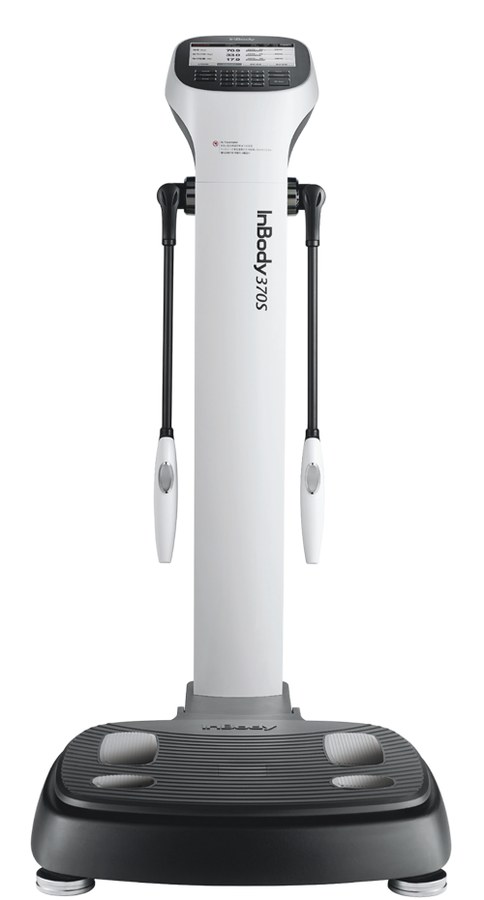
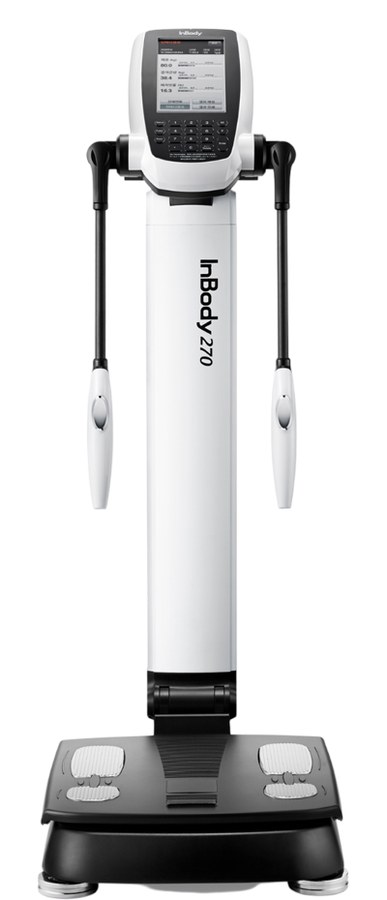
This is the single biggest driver, because it determines which outputs are physically obtainable. A three-frequency device (for example 20, 50 and 100 kHz on the InBody 270S) delivers segmental muscle and fat plus visceral fat. A six-frequency device (1 kHz to 1,000 kHz on the InBody 770S) additionally delivers Phase Angle, segmental Phase Angle, extracellular-to-total body water ratios and visceral fat area in cm². More frequencies means more measurement hardware and substantially more signal processing.
2. Segmental measurement capability
Measuring five body segments independently requires a more complex electrode and switching arrangement than treating the body as one unit. Devices that measure the body as a single cylinder are cheaper and cannot show you where your muscle is.
3. Electrode system
Tetrapolar 8-point tactile electrodes — separating current-injecting from voltage-sensing contacts, with fixed anatomical start points at wrist and ankle — cost more than simple foot plates. They are also what makes a re-test eight weeks later genuinely comparable to the baseline.
4. Whether the device estimates or measures
Devices applying empirical corrections based on age, sex or ethnicity need less measurement hardware, because part of the answer comes from a lookup rather than the patient. They are cheaper for exactly that reason. InBody devices calculate directly from measured impedance per segment without those corrections, which is a hardware cost, not a software preference.
5. Clinical outputs and result sheets
Paediatric result sheets, research result sheets, water-balance sheets and body composition history tracking each represent validated output development. A device intended for a nephrology unit carries development work a gym device does not need.
6. Data storage, integration and throughput
Storage capacity matters for longitudinal use — the InBody 970S stores up to 100,000 measurements when IDs are entered. Export capability, integration with hospital or gym management systems, and printing suited to medical records all add cost and all matter in institutional settings.
7. Service, calibration and warranty terms
Frequently the largest difference between two quotes for similar hardware. Calibration schedule, service response time, parts coverage, duration and whether support is authorised in India all sit inside the number.
Why InBody Does Not Publish Fixed Prices
InBody India provides tailored quotes rather than a public price list, and the reasoning is practical: pricing depends on facility type, quantity, service plan and region. Institutional pricing for a hospital buying several units differs materially from a single studio buying one. Quotes are provided within 24 hours.
Two related points worth knowing before you shop:
- Professional InBody analysers (270S, 370S, 380, 570, 770S, 970S) are sold exclusively through InBody India, not through Amazon or third-party retailers. This is what keeps warranty, calibration and service support intact. InBody Dial home scales are a separate consumer product line and may be listed on retail platforms.
- Flexible payment arrangements exist for institutions — hospitals, gyms and research centres can discuss EMI, leasing or institutional terms rather than outright purchase.
How to Compare Quotes Like for Like
Most quote comparisons fail because the devices are not comparable. Normalise on these points before comparing any numbers:
| Ask | Why it changes the comparison |
|---|---|
| How many frequencies, and what are they? | Determines which outputs exist at all |
| Does it apply empirical estimation by age, sex or ethnicity? | A cheaper device may be partly predicting rather than measuring |
| Are all five segments measured independently? | Whole-body devices are a different product class |
| What is the published DEXA correlation, and from which study? | Accuracy claims without a citation are marketing |
| What does the warranty cover, for how long, and who services it? | Often the largest hidden difference |
| What is the calibration schedule and its cost? | Recurring, and skipping it degrades data |
| What consumables are required annually? | Recurring cost not in the sticker price |
| How many measurements does it store, and can data be exported? | Determines whether longitudinal tracking is possible |
Total Cost Over Five Years, Not Sticker Price
The purchase price is the visible part. Over a five-year life, these items frequently exceed the difference between two quotes:
- Calibration and preventive service, at whatever interval the manufacturer specifies.
- Consumables — result sheet paper, electrode maintenance items.
- Service response time. A device out of action for three weeks in a gym is lost testing appointments and lost upsells; in a hospital OPD it is a disrupted clinical pathway.
- Staff training. An analyser nobody can interpret produces printouts, not decisions.
- Data continuity. If the device cannot export, changing systems later means losing your history.
A device bought below specification tends to cost more in the end, because the data stops being trusted and the machine stops being used. That is the most expensive outcome available in this category — the full purchase price, amortised over zero useful tests.
Matching Spend to Setting
Buying above requirement wastes budget; buying below it produces data nobody acts on.
- Gym or studio — three-frequency professional device, fast test, member-readable sheet. Six-frequency clinical outputs are rarely used in this setting. See the gym buyer’s guide.
- Clinic or OPD — three-frequency minimum with segmental analysis and visceral fat; printouts suited to patient records.
- Hospital department — six frequencies where Phase Angle or fluid status is clinically relevant. See the hospital specification guide.
- Corporate wellness — throughput and aggregate reporting dominate. See corporate wellness screening.
A Note on Very Cheap Analysers
Devices at the bottom of the market are cheap for identifiable reasons, not because someone found an efficiency. Typically they measure foot-to-foot only, use a single frequency, and lean heavily on demographic estimation.
The failure mode is predictable and worth naming. The device gets installed, members or patients get tested, and within a few months someone notices that two very different people received near-identical reports. Trust evaporates. Staff stop offering the test. The asset sits unused. Nothing about that outcome is cheaper than buying the right device once.
If budget is genuinely constrained, the better trade is a lower-tier device from a properly measuring product line rather than a top-tier device from an estimating one.
Get a Quote Matched to Your Specification
A quote is only meaningful once the specification is settled. Decide the frequency count, segmental requirement and clinical outputs your setting needs, then compare on those terms.
Request a tailored quote at inbody.in/inbody-price.php, or discuss configuration through our enquiry form. Related reading: how to choose a body composition analyser, the complete BCA machine guide, and DSM-BIA vs single-frequency BIA.

Most trending articles
वज़न बढ़ाने के लिए क्या खाएं? सही डाइट प्लान (सिर्फ ज़्यादा खाना नहीं)
सिर्फ ज़्यादा खाने से मांसपेशी नहीं बनती, चर्बी बढ़ सकती है। सही कैलोरी सरप्लस, प्रोटीन और डाइट प्लान जो वज़न को सही तरीके से बढ़ाए — पूरी जानकारी हिंदी में।
भारत में प्रोटीन कितना ज़रूरी है? असली आंकड़े और सही फॉर्मूला
IMRB के एक सर्वे में लगभग 73% भारतीय आहार प्रोटीन-कम पाए गए। सही प्रोटीन टारगेट कैसे निकालें और किन फूड्स से पूरा करें — पूरी जानकारी हिंदी में।
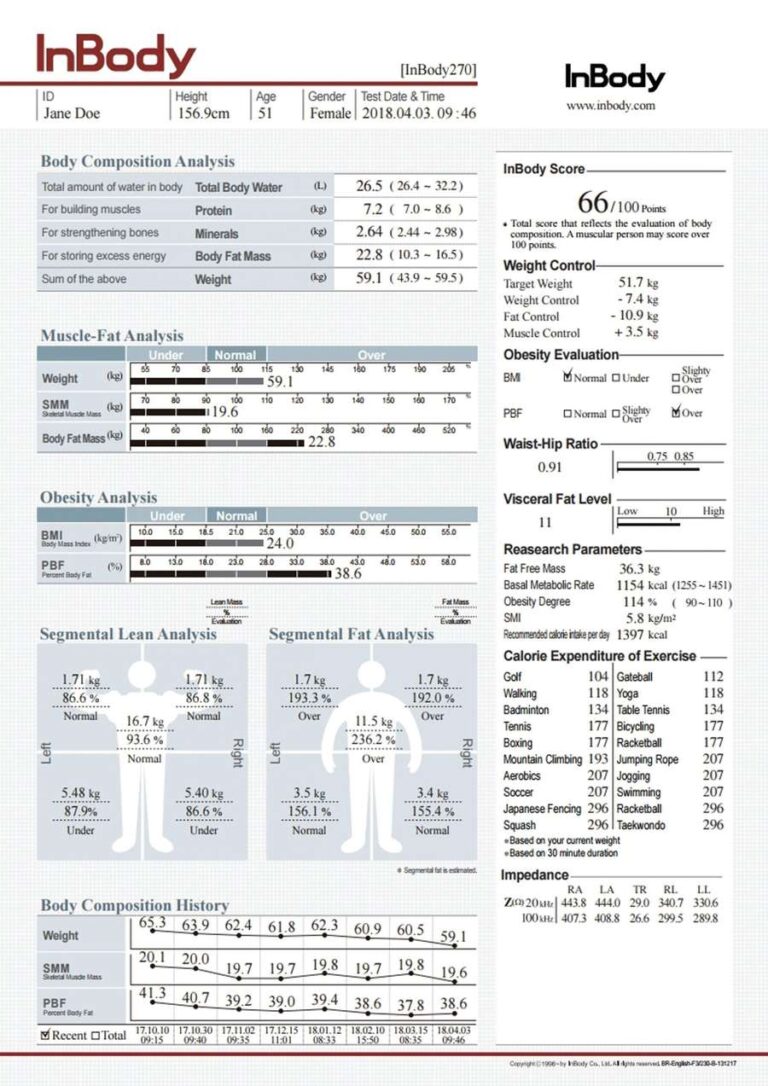
Metabolic Age क्या होती है? आपकी उम्र से ज़्यादा है या कम?
आपकी असली उम्र 34 है पर शरीर 50 साल जैसा व्यवहार कर सकता है। Metabolic age क्या है, मांसपेशी घटने के जोखिम क्या हैं और इसे कैसे घटाएं — पूरी जानकारी।