
Body Composition 8 min read
BMR Machine: How BMR Is Actually Measured or Estimated
Most BMR machines estimate, not measure. How indirect calorimetry works, how Mifflin and fat-free-mass formulas compare, and how to use your BMR number.
Reading about body composition? Find an InBody test centre near you →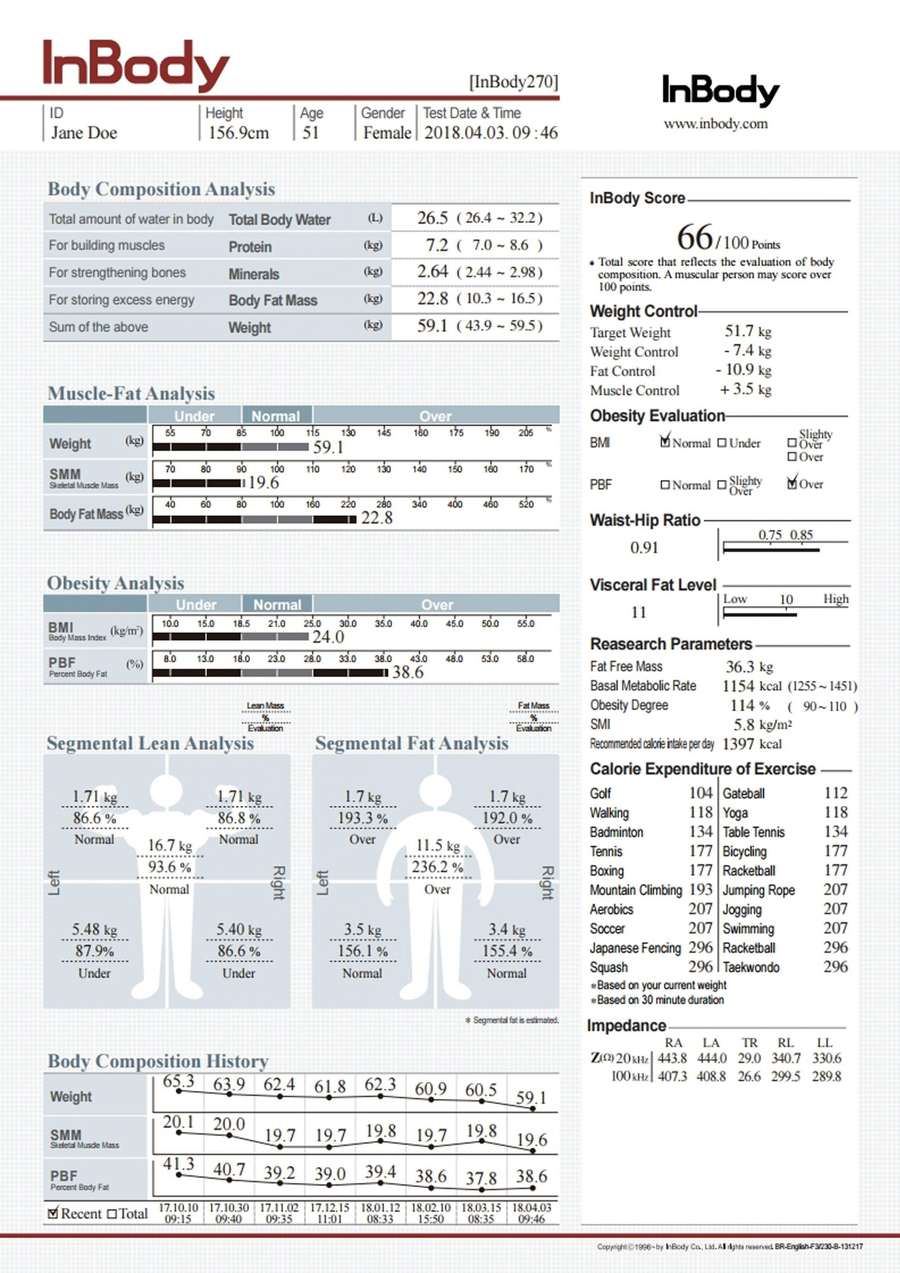
BMR Machine: How Your BMR Is Actually Measured (and Estimated)
Search for a BMR machine or a “BMR test near me” in India and you will find gyms, pharmacies and clinics offering to tell you your basal metabolic rate in a minute. Most of those machines do not measure BMR at all. They estimate it.
That is not a trick. It is how almost all BMR numbers are produced. There are two ways to get the figure. One is to measure it by analysing your breath, a method called indirect calorimetry. The other is to estimate it with an equation, using either your weight, height and age, or your fat-free mass from a body composition test. This guide explains each method, how close the estimates get, and how to use the number sensibly.
What BMR Is, in One Paragraph
Basal metabolic rate is the energy your body uses at complete rest to keep you alive: breathing, circulation, brain activity, keeping organs and tissue running. It is usually given in kilocalories per day. Strictly, “basal” means measured under tight conditions: awake but lying still, after an overnight fast, in a comfortable room. Most real-world tests measure the slightly looser resting metabolic rate (RMR). The two are close enough that most reports use them interchangeably, and this post does too.
The single biggest driver of BMR is your fat-free mass, meaning muscle, organs, bone and water. Fat tissue burns far less at rest. That is why two people with the same weight can have quite different BMRs.
Method 1: Measuring BMR With Indirect Calorimetry
Your body burns fuel using oxygen and produces carbon dioxide. Measure how much oxygen you take in and how much carbon dioxide you breathe out, and you can calculate how much energy you are using. The standard conversion goes back to an equation published by Weir in 1949. A 2019 clinical review describes indirect calorimetry as the gold standard for energy expenditure, because it measures your actual gas exchange.
The test takes more care than a scan. A systematic review of best-practice methods found that:
- Food, alcohol, caffeine and nicotine raise metabolic rate for hours afterwards, so they must be controlled before the test.
- Moderate or vigorous exercise has a longer carry-over effect and also has to be controlled.
- You should rest for 10 to 20 minutes before measurement starts.
- A 10-minute recording, with the first 5 minutes discarded and the remaining 5 minutes stable, gives an accurate reading.
A review from CMC Vellore describes indirect calorimetry being applied mainly in clinical situations such as acute illness and in research, and notes that its benefits are poorly appreciated because doctors get little exposure to it during training. If you want a true measured BMR, ask a hospital dietetics or endocrinology department whether they offer it.
Method 2: Estimating BMR From Weight, Height and Age
Most online BMR calculators, and many basic scales, use a prediction equation. These were built by measuring a group of people with calorimetry and fitting a formula to the results. The two best known are:
- Harris-Benedict, from 1919.
- Mifflin-St Jeor, from 1990. The original paper derived it from 498 healthy adults measured by calorimetry. For men: 10 × weight (kg) + 6.25 × height (cm) − 5 × age (years) + 5. For women, the same but −161 instead of +5. In that study, Harris-Benedict overestimated measured energy expenditure by 5%.
A 2005 systematic review compared the common equations. Mifflin-St Jeor was the most reliable, predicting resting metabolic rate within 10% of the measured value in more people than any other equation. But the authors warned of “noteworthy errors” for individuals, and noted that ethnic minorities were underrepresented in both building and testing these equations.
That warning matters in India. In a study of young men in urban South India, BMR measured by calorimetry was 6.5% lower than predicted by the FAO/WHO/UNU equation, though not significantly different from the Indian equation the authors tested. The study was small (19 men), but the direction is the point: international formulas can run high for Indians.
Method 3: Estimating BMR From Fat-Free Mass
Because fat-free mass drives BMR, some equations skip weight and use fat-free mass directly. The best known is Cunningham’s. His 1991 review proposed resting energy expenditure = 370 + 21.6 × fat-free mass (kg), and reported that fat-free mass explained 65 to 90% of the variation in resting energy expenditure across studies. The Mifflin paper found something similar: fat-free mass was the best single predictor.
Here is why that matters. Take two women, both 60 kg, 160 cm and 35 years old:
| Woman A | Woman B | |
|---|---|---|
| Fat-free mass | 40 kg | 46 kg |
| Mifflin-St Jeor estimate | about 1,264 kcal/day | about 1,264 kcal/day |
| Cunningham estimate | about 1,234 kcal/day | about 1,364 kcal/day |
The weight-based formula cannot tell them apart. The fat-free-mass formula can. This is the main advantage of a BMR figure that comes from a body composition test. Your lean body mass is part of the calculation.
So What Is the “BMR Machine” at the Gym?
In most gyms, pharmacies and clinics, the device offering a BMR reading is a body composition analyser or a body composition scale. It measures your body’s electrical impedance, estimates your fat-free mass from that, and calculates BMR with an equation. The InBody 270S, for example, lists basal metabolic rate among its additional outputs, and the InBody 270 manual places it with the research parameters next to fat-free mass. In the InBody documents we checked, the exact BMR equation is not published.
How close does a BIA-based BMR get to calorimetry? Our post on how the InBody 770 estimates BMR covers an Indian comparison in detail. In a 2025 study of 50 adults with a BMI of 25 or more in Mumbai, the mean was 1,602 kcal/day by calorimetry and 1,554 kcal/day by BIA. The authors judged the two clinically comparable within a ±10% margin, but it was one centre, one group, and they called for larger validation.
When you ask for a “BMR test near me”, ask one question: is this measured from my breath, or calculated? Both are useful. They are not the same thing.
Where BMR Estimates Go Wrong
- Individual error. Even the best equations miss some individuals by more than 10%. A group average says little about you.
- Population fit. Most equations were built on Western samples. The South Indian data above suggests they can overestimate for Indians.
- Garbage in, garbage out. A fat-free-mass formula is only as good as the fat-free-mass estimate. Hydration, a recent meal or a workout before a BIA scan can shift it. Our test preparation guide covers how to keep conditions steady.
- Thyroid, illness and medication. No equation knows about these. A measured result can differ for these reasons, and a doctor should interpret it.
How to Use Your BMR Number
Treat BMR as a baseline, not a diet plan.
- It is not your daily calorie need. Total daily energy use is BMR plus activity plus digesting food. In the South Indian study, measured activity levels were also lower than guideline values, so total expenditure was about 13% lower than the recommended requirement. Estimates can stack up in the wrong direction.
- Watch the trend, not the figure. If your BMR estimate drops during weight loss, it usually means the analyser estimated a loss of fat-free mass. That is your cue to look at skeletal muscle mass, protein intake and strength training.
- Compare like with like. Use the same device, at the same time of day, under the same conditions.
- Get a dietitian’s help if you are setting calorie targets for a medical reason. They can decide whether an estimate is good enough or a measured value is worth it.
If you have seen “metabolic age” printed near your BMR, that is a separate, derived score. Our metabolic age explainer covers it.
Frequently Asked Questions
Which machine is used to measure BMR?
A true measurement uses an indirect calorimeter, which analyses the oxygen you breathe in and the carbon dioxide you breathe out. Most “BMR machines” in gyms and pharmacies are body composition analysers or scales that calculate BMR from your estimated fat-free mass using an equation.
Is the BMR on an InBody report measured or calculated?
Calculated. The analyser measures electrical impedance, estimates your fat-free mass, and derives BMR from that. It is generally a better personal estimate than a weight-only formula because it accounts for muscle, but it is not a breath measurement.
How accurate are BMR calculators?
A 2005 systematic review found Mifflin-St Jeor was the most reliable common equation, predicting resting metabolic rate within 10% of measured values for more people than other equations. Errors for individuals can still be large, and Indian data suggests some international equations run high.
Where can I get a BMR test done near me?
For a calculated BMR, any centre with a body composition analyser can give you one in a short test. For a measured BMR by indirect calorimetry, ask hospital dietetics, endocrinology or clinical nutrition departments whether they offer it.
Why is my BMR lower than my friend’s at the same weight?
Most likely because you carry less fat-free mass. Muscle and organs drive resting energy use. Age, sex and height also play a part. A fat-free-mass-based estimate shows this difference; a weight-only formula does not.
Should I eat only my BMR calories to lose weight?
No. BMR is what your body uses at complete rest, before any activity. Calorie targets should be set with a doctor or dietitian, especially if you have a medical condition, and progress should be checked by tracking muscle as well as fat.
Get a BMR Estimate Based on Your Own Muscle
A body composition test estimates BMR from your fat-free mass, not just your weight. Find an InBody test centre near you, or read what an InBody test involves. Running a gym or clinic? See the InBody 270S and ask for a quote.
This article is for general education and is not a substitute for medical or dietetic advice. Talk to your doctor before making major diet changes, especially if you have a thyroid, kidney or metabolic condition.
Related reading: muscle mass test in India, who should not take an InBody test, and what body composition reveals about metabolism.

Most trending articles
Student Fitness Screening in India: A Guide for Schools
CBSE HPE, Fit India and Khelo India rely on BMI. How schools and colleges can add body composition screening safely, with child caveats and DPDP consent.
Creatine and Your Body Composition Scan: What Changes
Creatine raises body water and lean mass readings within a week on BIA and DXA. What the studies show and how to time your scans to read progress honestly.
Fitness Testing and Body Composition for Sports Academies
A practical fitness testing battery for Indian sports academies: body composition, grip, jumps, sprints, Yo-Yo, Khelo India context and youth maturation.