
Body Composition 10 min read
Visceral Fat: Normal Range, Risks, and How to Measure It (India 2026)
Visceral fat is the deep abdominal fat wrapped around your liver, pancreas, intestines, and other organs. Unlike the subcutaneous fat under your skin, visceral fat is metabolically active;…
Reading about body composition? Find an InBody test centre near you →
Visceral fat is the deep abdominal fat wrapped around your liver, pancreas, intestines, and other organs. Unlike the subcutaneous fat under your skin, visceral fat is metabolically active; it secretes inflammatory cytokines, drives insulin resistance, and is the single strongest body composition predictor of type 2 diabetes, cardiovascular disease, and metabolic syndrome in Indian adults.
Most Indians do not know their visceral fat number. They know their weight. They might know their BMI. They might know their body fat percentage. But visceral fat, the actual measurement that predicts whether they will develop diabetes by age 50, is invisible to standard scales. This guide gives you the normal range, the India-specific risk thresholds, and the practical ways to measure them.
What visceral fat actually is
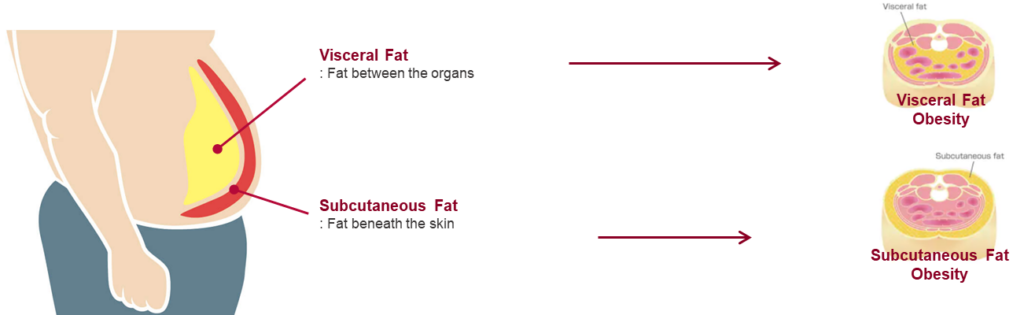
Your abdominal fat comes in two distinct types. Subcutaneous fat sits just under the skin, which is what you pinch on your stomach. It looks unflattering, but it is metabolically relatively quiet. Visceral fat sits much deeper, wrapped around your internal organs in the abdominal cavity. You cannot pinch it. You often cannot see it from the outside, especially in lean-looking individuals.
Visceral fat is dangerous because it is endocrinologically active. It releases free fatty acids directly into the portal vein, leading to the liver, raising hepatic insulin resistance. It secretes inflammatory cytokines (IL-6, TNF-alpha) that drive systemic inflammation. It correlates with non-alcoholic fatty liver disease, type 2 diabetes, cardiovascular disease, certain cancers, and dementia.
For Indians, the visceral fat problem is compounded by genetics. South Asian populations carry more visceral fat at the same total body weight and BMI than people of European descent, the so-called “thin-fat” phenotype documented in decades of peer-reviewed Indian metabolic research. This is why a normal-looking 32-year-old Indian software engineer can develop full type 2 diabetes despite a BMI of 22.
The visceral fat normal range on the zInBody scale
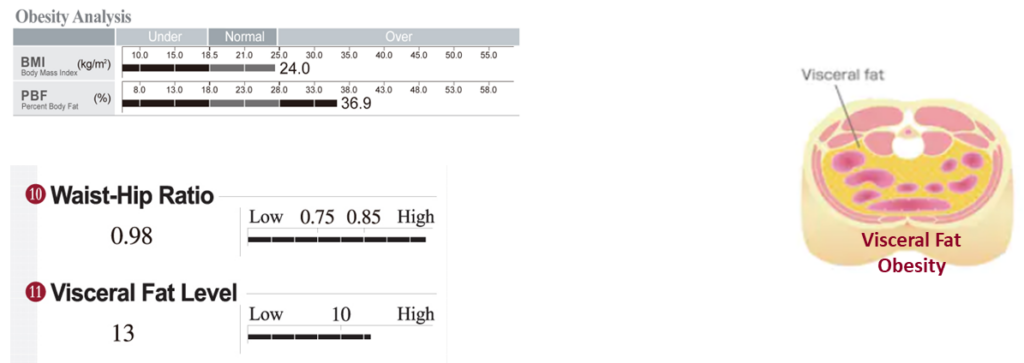
InBody body composition analysers report visceral fat as a level from 1 to 30, calibrated against MRI cross-sectional area measurements. The normal range and risk thresholds:
| Visceral fat level | Status | Approximate visceral fat area |
|---|---|---|
| 1–9 | Healthy | Under 100 cm² |
| 10–14 | Elevated early warning | 100–150 cm² |
| 15–19 | High metabolic risk | 150–200 cm² |
| 20+ | Very strong intervention indicated | 200+ cm² |
The InBody scale is consistent globally, but the action thresholds in India should be tighter. A visceral fat level of 11 in a Caucasian male might still be in a manageable range. The same level 11 in an Indian male places him squarely in metabolic syndrome territory, especially if combined with a fasting blood glucose level creeping above 100 mg/dL or triglycerides above 150 mg/dL.
How visceral fat is measured: three methods compared
| Method | Accuracy | Time | Radiation | India availability |
|---|---|---|---|---|
| MRI / CT scan | Gold standard direct cross-sectional area | 10–30 min | CT yes; MRI no | Hospital only; ₹3,000–₹15,000 |
| InBody DSM-BIA (770S, 970S) | Strong correlation with MRI (validated) | 60 sec | Zero | 1,500+ centres India-wide; ₹500–₹2,000 |
| Waist circumference | Indirect proxy misses lean-skinny-fat cases | 30 sec | Zero | Free; any tape measure |
| DEXA scan | Excellent for total body composition; visceral fat add-on is variable | 10–20 min | Low X-ray dose | Limited centres; ₹4,000–₹8,000 |
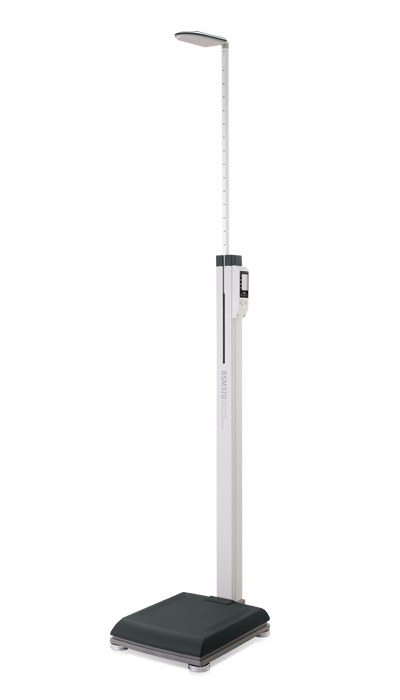
For most Indians, the practical answer is an InBody scan. It catches visceral fat in 60 seconds, has zero radiation (important for repeat measurement), and is available in 100+ Indian cities. Repeat the scan every 8–12 weeks while making changes to your diet and training; the trend is what matters.
The Indian visceral fat picture what the data actually shows
Several large Indian population studies have measured visceral fat patterns:
- The ICMR-INDIAB study and follow-on Indian population research consistently show Indian adults carry 3–5% more body fat at the same BMI than Caucasian counterparts, with a disproportionate share concentrated as visceral fat.
- Urban Indian metabolic syndrome prevalence sits around 30% of adults, and the strongest single body composition predictor is visceral fat level above 10, not body weight or BMI.
- Indian men in their 30s are showing visceral fat levels typically seen in Caucasian men in their 50s, a generational compression of metabolic disease onset that India’s healthcare system was not designed for.
This is the practical takeaway. Indian metabolic syndrome prevalence is rising, the average age of onset is dropping, and the screening tool that catches it earliest is visceral fat measurement — well before BMI, fasting glucose, or blood pressure flags a problem.
Why low skeletal muscle mass makes visceral fat worse
Visceral fat accumulation is not just a diet problem — it is also a muscle problem. Skeletal muscle is metabolically active tissue that governs whether the body burns or stores energy, and low muscle mass directly accelerates visceral fat gain through three mechanisms:
- Lower resting energy burn. Muscle burns roughly 13 kcal/kg/day at rest versus about 4.5 kcal/kg/day for fat. Losing muscle lowers basal metabolic rate, creating a slow caloric surplus the body preferentially stores as visceral fat.
- Impaired glucose disposal. Skeletal muscle handles roughly 80% of insulin-stimulated glucose uptake after meals. Low muscle mass compromises this pathway regardless of diet, forcing the pancreas to secrete more insulin — and chronically elevated insulin is itself a driver of visceral fat deposition.
- Reduced myokine signalling. Active muscle secretes myokines (IL-6, irisin, FGF21) that stimulate fat oxidation and suppress visceral fat expansion. When muscle mass and activity are low, this anti-fat-storage signal drops off.
A 2020 InBody-Ipsos study of 1,243 Indian adults across 8 cities found 71% had poor muscle health — meaning this muscle-fat imbalance is the norm, not the exception, in urban India. It is also why visceral fat and low muscle mass are best diagnosed together: an InBody scan reports Skeletal Muscle Mass and Visceral Fat Level side by side on the same 60-second result sheet, so the full picture is visible at once, not just one half of it.
An illustrative case
Illustrative example composite based on typical patient profiles.
A 34-year-old project manager in Hyderabad. BMI 23.8. Weight has been stable for five years. Walks 8,000 steps daily. Eats home food. His annual corporate health check flags borderline fasting glucose (104 mg/dL) and elevated triglycerides (172 mg/dL). The standard scale and BMI tell him nothing actionable. His InBody scan reveals: total body fat 23% (in normal range), but visceral fat level 14 (clearly elevated), and skeletal muscle index below 50th percentile for his age. The intervention is not “lose weight.” It is: build skeletal muscle through resistance training, replace the carb-heavy thali pattern with protein-first meals, and re-test in 12 weeks. Twelve months later, visceral fat is at 8, glucose is normalised, and triglycerides are at 110. Body weight: down 2 kg. Body composition: completely transformed.
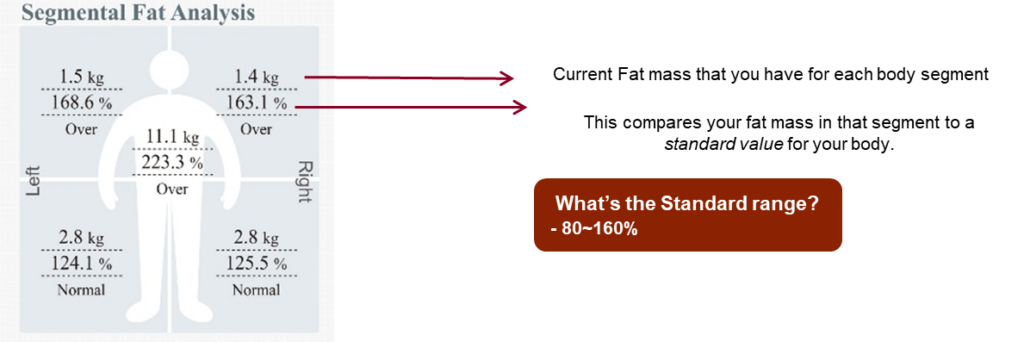
A second illustrative case, showing muscle and visceral fat can be fixed at the same time: A 47-year-old HR director in Mumbai presented for a corporate wellness assessment. Weight 61 kg, BMI 23.4, blood pressure normal, fasting glucose 105 mg/dL (borderline) — nothing on a standard check-up flagged a problem. Her InBody scan told a different story: skeletal muscle mass 3.6 kg below the norm for her age and height, visceral fat level 13 (above the risk threshold of 10), and an InBody Score of 62. A 16-week programme of resistance training three times a week, protein increased to 1.3 g/kg/day, and vitamin D correction produced a measurable, simultaneous shift: +2.9 kg skeletal muscle mass, visceral fat level down from 13 to 9, and fasting glucose back to 96 mg/dL. Her InBody Score rose from 62 to 79. Her body weight changed by only 1.2 kg — a change the scale alone would barely have registered.
How to lower visceral fat: the evidence-based plan
- Resistance training 3–4× per week. The strongest single intervention. Visceral fat responds more to muscle-building training than to cardio. Muscle is your largest glucose disposal site, and growing it reduces the demand on insulin that drives visceral fat storage.
- Protein at 1.6–2.2 g per kg body weight per day. Most Indians eat at half this level. Fix this first: paneer, dal, eggs, fish, chicken, and adequate dairy. Full protein guide.
- Reduce refined carbohydrate and added sugar intake. Refined wheat, white rice, sweets, and sugary drinks raise insulin chronically and drive visceral fat storage — fructose in particular is processed almost entirely in the liver and converted preferentially into visceral fat. Replace with whole grains, dal-heavy meals, and adequate protein. See how sugar specifically drives visceral fat in the Indian diet.
- Sleep 7+ hours. Sleep debt raises cortisol, which preferentially stores fat as visceral fat, exactly where Indians do not need more.
- Daily walking 7,000–10,000 steps. Steady-state low-intensity movement reduces visceral fat independently of weight loss. Walk after meals, especially.
- Track via InBody scan every 8–12 weeks. Visceral fat does not change visibly in the mirror. The scan number does. Find an InBody centre near you.
What does NOT reliably lower visceral fat
Several popular interventions are weaker than people think:
- Daily cardio without strength training. Cardio alone can lower visceral fat modestly, but it also lowers muscle mass; the net metabolic effect is often a wash. Combine with resistance training for actual change.
- “Detox” cleanses, lemon water, ACV. No reliable effect on visceral fat. Marketing.
- Spot exercises (crunches, planks, ab routines). Strengthen abdominal muscles, but do not preferentially reduce visceral fat.
- Aggressive calorie restriction without protein protection. Drops weight, including muscle; visceral fat often rebounds.
Who in India should get screened for visceral fat
Given that most Indian adults have never had their visceral fat measured, the pragmatic answer is: any adult over 30 who has not had a body composition assessment should get one. These groups carry the highest priority:
- Sedentary desk-job adults (IT, banking, services). Muscle loss and visceral fat gain both begin silently; symptoms typically appear only once 20–30% of muscle mass is already gone.
- Anyone with prediabetes or Type 2 diabetes. Low muscle mass both causes and accelerates insulin resistance — body composition monitoring should be standard in every diabetes care plan.
- Normal or low-BMI adults with elevated triglycerides or fasting glucose. This pattern strongly suggests the thin-fat phenotype; a scan will usually confirm it.
- Women post-menopause. Oestrogen withdrawal accelerates muscle loss, and visceral fat often rises sharply even without any change in diet.
- Anyone with unexplained fatigue or difficulty losing weight despite eating well. A classic presentation of sarcopenic obesity — usually clarified in minutes by a scan.
Organisations with a desk-based workforce can screen for exactly this pattern at scale — see our guide to running corporate wellness body composition screening.
Frequently asked questions
Q. What is a normal visceral fat level for an Indian adult?
On the InBody scale (1–30), a healthy visceral fat level is 1–9. Levels 10–14 are early warning. Above 15 is clearly an elevated metabolic risk. For Indians specifically, action thresholds should be tighter than Western guidance because of the higher base-rate of insulin resistance, staying under 10 is the practical goal.
Q. Can a thin person have high visceral fat?
Yes, and Indians are particularly prone to this. The “thin-fat” phenotype means a person with a BMI of 22 with a normal-looking abdomen can still carry visceral fat at a level of 12–14. This is the most underdiagnosed metabolic risk pattern in urban India. An InBody scan catches it; BMI does not.
Q. How quickly can visceral fat drop?
Faster than total body fat. Visceral fat is the most metabolically reactive fat tissue. People who lose 5–10% of body weight typically see a 25–30% reduction in visceral fat over 12–16 weeks. Strength training + protein-corrected eating accelerates the timeline.
Q. How is the InBody visceral fat measurement different from a CT scan?
A CT scan directly measures cross-sectional visceral fat area in cm². InBody DSM-BIA estimates the same area using multi-frequency electrical impedance, validated against CT in clinical studies. CT is the gold standard for one-off precision; InBody is the practical standard for repeated tracking, no radiation, faster, cheaper, and available in 1,500+ Indian centres.
Q. Does walking reduce visceral fat?
Yes, modestly, when consistent. Daily walking at 7,000–10,000 steps reduces visceral fat independently of weight loss, especially when paired with reduced refined carbs. But walking alone is slower than walking + resistance training combined. For meaningful change inside 12 weeks, both are needed.
Q. What is the difference between visceral fat and belly fat?
“Belly fat” is a colloquial term that includes both subcutaneous fat (just under the skin, pinchable) and visceral fat (deep around organs, not pinchable). Subcutaneous belly fat is cosmetic; visceral fat is the medically dangerous portion. Two people with the same visible belly can have very different visceral fat levels; only a scan tells you which.
Q. Do GLP-1 drugs (Ozempic, Wegovy, Mounjaro) reduce visceral fat?
Yes substantially. GLP-1 medications typically reduce visceral fat at a faster rate than subcutaneous fat. But they also reduce muscle mass alongside fat, which is why combining them with resistance training and adequate protein is essential. More on protecting muscle during GLP-1 use.
Q. How is visceral fat connected to muscle mass?
Directly. Skeletal muscle handles most of the body’s insulin-stimulated glucose disposal and secretes myokines that suppress fat storage, so low muscle mass raises insulin and lowers fat-burning signalling at the same time — both of which drive visceral fat up. In India, where an InBody-Ipsos study found 71% of adults have poor muscle health, this is one of the most common and least-diagnosed drivers of rising visceral fat. Resistance training and adequate protein address both sides of the problem simultaneously.
Want to know your visceral fat level today? A 60-second InBody scan gives you visceral fat, segmental muscle balance, body fat percentage, and metabolic age all in one printed result sheet. Find an InBody centre in your city.
