
Health 10 min read
Fertility Treatment & Body Composition: What Visceral Fat Research Means for IVF Outcomes in India [2026]
Real, published research links visceral fat—not just BMI—to fertility and IVF outcomes. A gentle, evidence-based guide for anyone navigating fertility treatment in India.
Reading about body composition? Find an InBody test centre near you →![Fertility Treatment & Body Composition: What Visceral Fat Research Means for IVF Outcomes in India [2026]](https://www.inbody.in/blog/wp-content/uploads/2026/08/infertility-ivf-body-composition-india.jpg)
Body Composition and Fertility: One Piece of a Much Bigger Picture
Fertility treatment asks a lot of you. Injections on a schedule, blood draws, scans, waiting rooms, and a two-week wait that can feel like the longest fortnight of your life. If you are in the middle of it, or just starting to explore IVF, IUI, or any fertility work-up, please know this first: nothing in this article is about blame, and nothing here is a guarantee.
What we want to share is something gentler and more useful — a look at what real, published research says about the relationship between body composition and fertility, particularly a specific kind of fat called visceral fat, and how it may relate to IVF outcomes. This is not the same as saying weight or body shape causes infertility. Infertility has dozens of possible causes — genetic, hormonal, structural, male-factor, or unexplained — and body composition is, at most, one small piece of a much larger picture that only your fertility specialist can assess.
Still, it is a piece worth understanding, because it is often overlooked. Most conversations around fertility and weight stop at BMI — a single number on a chart. A growing body of reproductive medicine research suggests that where fat is stored in the body may matter more than how much a person weighs. That distinction offers something valuable: real information, not judgment.
What the Research Actually Shows About Visceral Fat and IVF
Visceral fat is fat stored deep around the internal organs — the liver, intestines, and pancreas — rather than just under the skin. Because it behaves differently in the body (it is more metabolically active and linked to inflammation and insulin resistance), researchers have started studying it separately from overall weight or BMI when looking at fertility treatment outcomes.
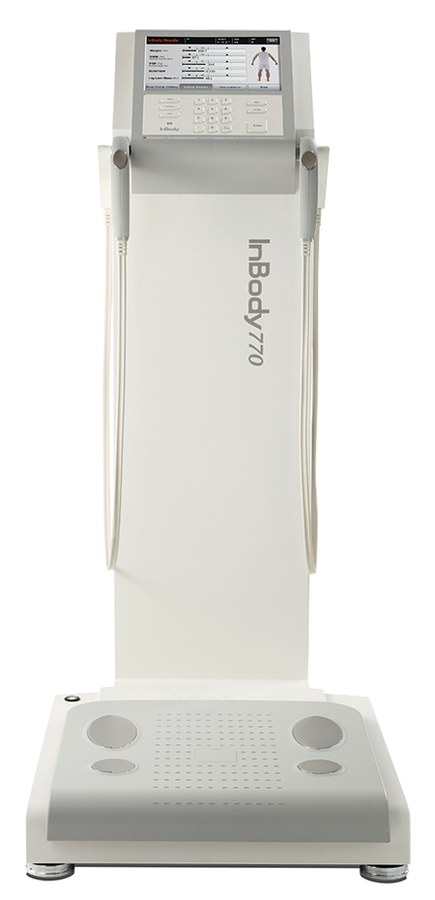
One of the larger recent studies, published in Frontiers in Endocrinology in 2025, followed 1,510 women undergoing frozen embryo transfer and measured their visceral fat area using bioelectrical impedance analysis — the same underlying technology used in InBody body composition testing. Splitting patients into higher and lower visceral fat groups, the researchers found somewhat lower rates of biochemical pregnancy (66.1% vs. 76.6%), embryo implantation (42.3% vs. 47.1%), clinical pregnancy (53.7% vs. 60.4%), and live birth (44.8% vs. 50.8%) in the higher visceral fat group.
It’s worth sitting with those numbers honestly, in both directions. Yes, the higher visceral fat group had somewhat lower rates across the board. But nearly 45 out of every 100 women in that group still had a live birth from that transfer — this is a shift in probability, not a verdict on any individual’s outcome. A separate 2026 study of 882 women at fertility clinics in India, evaluating their first IVF cycle, found that higher visceral adiposity was associated with lower-quality embryos at the cleavage stage. Analyses of the US NHANES health survey have similarly found a statistical association between visceral fat and infertility risk across thousands of women.
The American Society for Reproductive Medicine, in its 2021 committee opinion on obesity and reproduction, echoes this: it notes that abdominal and visceral fat appear more predictive of ovulatory dysfunction than total body fat does. But the same opinion is careful to add important context we’ll return to below — this is an association, not a guarantee, and it should never be used to gatekeep anyone’s access to fertility care.
Why BMI Doesn’t Tell the Full Story
This blog has made this point about body composition before, and it applies just as directly here: two people can share the exact same BMI and have very different amounts of visceral fat — and, it turns out, potentially different fertility-relevant risk profiles as a result.
In that same 2025 frozen embryo transfer study, 34.2% of participants were classified as normal weight or underweight by BMI yet had elevated visceral fat area, while 4.3% were classified as overweight or obese by BMI but actually had lower visceral fat. BMI misclassified a meaningful share of women in both directions.
An even more striking finding comes from an NHANES-based analysis presented at a reproductive medicine conference: when researchers separated participants by BMI category, visceral fat obesity was associated with infertility specifically among women in the normal-weight category — not the overweight or obese categories. In plain terms: a woman with a “normal” BMI is not automatically in the clear on this factor, and a woman with a higher BMI does not automatically carry elevated visceral fat. The number on a BMI chart simply cannot tell you what is happening beneath the surface. A body composition test — checking visceral fat area, body fat percentage, and muscle mass together — gives a fuller and, often, a calmer picture than the scale or a BMI calculator ever could.
Fertility Treatment in India: A Fast-Growing, Still-Isolating Journey
Infertility affects far more Indian couples than is commonly discussed. Indian Council of Medical Research estimates cited in a 2024 review suggest approximately 20 million Indian couples are affected by infertility at any given time, with prevalence estimates ranging from roughly 3–14% depending on the population studied. The same review notes that ART (assisted reproductive technology) centres in India grew from around 500 in 2010 to roughly 1,500 by 2019, and industry analysts estimate India’s IVF market was worth close to USD 1 billion in 2025, with continued growth projected as awareness spreads to smaller cities.
More clinics and more couples seeking care is a hopeful sign — it means more people are getting access to treatment that once felt out of reach. But growth in clinics has not been matched by growth in emotional support. A 2020 study of 300 women seeking fertility treatment at a hospital in Karnataka found 78% reported psychological difficulties, and 45% met clinical criteria for a diagnosable psychiatric condition — most commonly adjustment disorder or anxiety. Fewer than 15% had ever consulted a mental health professional about it. Many Indian women navigating fertility treatment also carry an additional, often unspoken weight — social stigma around childlessness that rarely gets acknowledged in a clinical setting, let alone addressed.
We share this not to add to the weight of what you’re carrying, but because it matters: if body composition is ever part of your fertility conversation, it should be one calm, factual thread in a much larger, more compassionate conversation — not the whole story, and never a source of additional guilt.
What This Means for You, Practically
If you are undergoing or considering fertility treatment, here is the honest, grounded takeaway: body composition testing is one piece of information you can bring to your fertility specialist — not a diagnosis, not a prescription, and not something you need to “pass” before you deserve care.
A body composition test (like an InBody scan) can show your visceral fat area, body fat percentage, and skeletal muscle mass in a single, quick, non-invasive session. None of these numbers are pass/fail. They are simply a starting point for a conversation — with your gynaecologist, reproductive endocrinologist, or a nutritionist working alongside your fertility team — about what, if anything, might be worth addressing alongside your treatment plan.
This is also where we want to be especially careful, because well-meaning advice can cause real harm here. The ASRM’s own guidance states plainly that obesity should not be the sole reason a patient is denied fertility treatment, and that pre-treatment weight loss has not been reliably shown to improve live birth rates for most patients. For women whose fertility is also affected by age, delaying treatment to lose weight first can sometimes work against you by using up time you don’t have to spare. Small, medically supervised diet-and-exercise programmes before IVF have shown reductions in visceral fat alongside more favourable outcomes for some patients with obesity — but these were gradual, clinically guided, and built around each patient’s readiness, never rushed self-directed regimens undertaken to “qualify” for treatment.
If your specialist does recommend nutrition or movement changes, they are typically aimed at supporting hormonal regulation and general readiness for treatment and pregnancy — not at achieving a particular look or number. Gentle, sustainable habits — balanced meals, regular moderate movement, adequate sleep, and stress reduction — support overall health in ways worth having regardless of your fertility outcome. None of it is a guaranteed fix, and none of it should ever be framed as something you failed to do.
Frequently Asked Questions
Does having a higher body fat percentage mean I won’t be able to conceive?
No. Body fat percentage alone doesn’t determine fertility. Many women with higher body fat percentages conceive naturally or through IVF, and many women with lower body fat percentages face infertility from entirely unrelated causes. Research shows a statistical association between visceral fat specifically and some fertility outcomes, but it is one factor among dozens your fertility specialist will consider — not a prediction of your personal outcome.
Is visceral fat something I should worry about if my BMI is normal?
It’s worth knowing about, not worrying about. Some research, including US-based NHANES data, has found visceral fat linked to infertility even in women with normal BMI, because visceral fat and BMI don’t always move together. If a body composition test shows elevated visceral fat despite a normal BMI, treat it as useful information to share with your fertility specialist — not a diagnosis in itself.
Can losing weight before starting IVF improve my chances of success?
This is genuinely unclear, and current clinical guidance urges caution. The American Society for Reproductive Medicine notes that pre-treatment weight loss has not been shown to reliably improve live birth rates for most patients, and that delaying treatment to lose weight can work against patients whose fertility is also declining with age. Any decision about this should be made with your fertility specialist, on their timeline, not undertaken alone.
Will my fertility clinic ask about my body composition?
Some clinics discuss weight, BMI, or metabolic health as part of a fertility work-up, particularly when conditions like PCOS or insulin resistance are suspected. Full body composition testing — measuring visceral fat, muscle mass, and body fat percentage — is not yet standard at most Indian fertility clinics, but it can be a useful, non-judgemental way to understand your starting point if your specialist recommends it.
Is it my fault if my body composition is affecting my fertility?
No. Body composition is shaped by genetics, hormones, medical conditions, stress, sleep, and many factors outside anyone’s control — it is never a reflection of effort, willpower, or worth. Infertility itself has dozens of possible causes, and even where body composition plays a role, it is one variable among many, not something anyone chose or could simply have prevented.
What is visceral fat, and how is it different from body fat percentage?
Visceral fat is fat stored deep around internal organs like the liver, intestines, and pancreas, rather than just under the skin. Body fat percentage measures total fat across your whole body, while visceral fat measures fat in this specific, more metabolically active location. Two people can share the same body fat percentage or BMI and have very different visceral fat levels — which is part of why researchers now study it separately.
Should I get a body composition test before starting fertility treatment?
It’s a reasonable, low-pressure step if you’re curious. A body composition test is quick and non-invasive, and simply gives you data — visceral fat area, muscle mass, body fat percentage — to discuss with your fertility specialist if you choose to. It is not a requirement for treatment, not a diagnostic test for infertility, and should never delay or gate your access to care.
You Deserve Support, Not a Checklist
If you take one thing from this article, let it be this: fertility treatment is hard enough without adding pressure about your body. Whatever your visceral fat, body fat percentage, or BMI shows, it does not measure your worth, your effort, or your chances of becoming a parent. It is, at most, one data point among many that a fertility specialist can help you understand — never a verdict, never a DIY fix, and never a substitute for the medical care and emotional support you deserve throughout this journey.
If you’d like a clear, judgement-free baseline to bring into a conversation with your fertility team, an InBody body composition test measures visceral fat, body fat percentage, and muscle mass in one quick session. Book an InBody test whenever it feels right for you — there is no rush, and no requirement.
Related reading:

Most trending articles
Hypothyroidism Symptoms in India: Signs Most People Miss
1 in 10 Indian adults has hypothyroidism, and it hides behind ordinary tiredness. The early signs most people blame on stress, age, or a new baby.

वज़न बढ़ाने के लिए क्या खाएं? सही डाइट प्लान (सिर्फ ज़्यादा खाना नहीं)
सिर्फ ज़्यादा खाने से मांसपेशी नहीं बनती, चर्बी बढ़ सकती है। सही कैलोरी सरप्लस, प्रोटीन और डाइट प्लान जो वज़न को सही तरीके से बढ़ाए — पूरी जानकारी हिंदी में।
भारत में प्रोटीन कितना ज़रूरी है? असली आंकड़े और सही फॉर्मूला
IMRB के एक सर्वे में लगभग 73% भारतीय आहार प्रोटीन-कम पाए गए। सही प्रोटीन टारगेट कैसे निकालें और किन फूड्स से पूरा करें — पूरी जानकारी हिंदी में।