
Body Composition 10 min read
Vitamin D Deficiency in India: The Sunshine Paradox That’s Quietly Draining Your Muscle Mass
71% of urban Indian adults are severely vitamin D deficient despite year-round sunshine. How it quietly caps muscle protein synthesis — and what to check.
Reading about body composition? Find an InBody test centre near you →
The Muscle Plateau India’s Sunshine Was Supposed to Prevent
India gets more sunlight in a single winter fortnight than most of Northern Europe sees in a year. Yet at body composition testing centres from Mumbai to Delhi to Bengaluru, a familiar pattern keeps showing up: people training consistently and eating reasonably well, still watching their Skeletal Muscle Mass stall — or slide backward — on their InBody report. Vitamin D deficiency in India is a major, well-documented reason why. Despite abundant sunshine, a large majority of urban Indians are vitamin D deficient — and vitamin D is not a peripheral nutrient. It acts directly on skeletal muscle tissue, influencing muscle protein synthesis, strength, and the muscle mass numbers on a body composition scan.
Picture a 30-year-old in Bengaluru training four times a week, hitting his protein targets — and still finding his strength gains have flattened, his SMM hasn’t moved across two InBody tests, and a low-grade fatigue never quite lifts. Nobody thinks to suspect a “sunshine vitamin” deficiency in a tropical country. But the data on Indian vitamin D status tells a very different story than the geography suggests.
Why Vitamin D Deficiency Is So Common in a Country Full of Sunshine
Sunlight makes vitamin D through a simple mechanism: UVB radiation striking bare skin converts a cholesterol derivative into previtamin D3, which the body processes into usable vitamin D. A country sitting largely within the tropics should see close to zero deficiency. In practice, several factors specific to modern Indian life interrupt this process at nearly every stage.
- Indoor lifestyles: Urban India’s workforce — IT staff, students, factory-shift and office workers — now spends most daylight hours indoors, under artificial light that carries none of the UVB needed for synthesis. The commute, the office, the mall: none of it counts as sun exposure.
- Air pollution blocking UVB before it reaches the skin: A study in Archives of Disease in Childhood compared children in Delhi’s heavily polluted Mori Gate area with children in far less polluted Gurgaon and found mean vitamin D levels of 12.4 ng/mL versus 27.1 ng/mL — more than double — with pollution tracking inversely with solar UVB reaching street level. PM2.5, which most major Indian cities routinely exceed safe limits for, scatters and absorbs UVB before it reaches skin.
- Higher melanin requiring longer sun exposure: Melanin, the pigment behind Indian skin tone, absorbs UVB radiation, competing with the skin’s vitamin D-synthesising machinery. Darker skin needs meaningfully longer direct exposure than lighter skin for the same synthesis — a disadvantage abundant sunlight alone doesn’t cancel out.
- Clothing coverage and sunscreen habits: Clothing norms covering large areas of skin, plus rising sunscreen use (for legitimate skin-cancer and pigmentation reasons), further block UVB — reasonable individual choices that together shrink the skin surface actually available for synthesis.
- A sharp urban–rural divide: A National Capital Region (Delhi) study found a median vitamin D level of just 7.7 ng/mL in urban adults versus 16.2 ng/mL in rural adults from the same region — roughly double. Lifestyle, not latitude, is doing most of the damage.
The net effect: India, despite its latitude, now reports some of the highest vitamin D deficiency rates measured anywhere — a well-documented paradox in Indian medical literature, not a fringe claim.
The Muscle Connection: What Vitamin D Actually Does Inside Skeletal Muscle
Vitamin D’s reputation is almost entirely about bones. That understates what research over the last 15 years has established: skeletal muscle tissue itself expresses vitamin D receptors (VDR), and vitamin D acts directly on muscle cells, not just indirectly through calcium metabolism.
1. Direct effects on muscle protein synthesis
Research summarised in Nutrition Research Reviews (Cambridge University Press) describes how the active form of vitamin D, 1,25-dihydroxyvitamin D3, activates the Akt/mTOR signalling pathway inside muscle cells — the same anabolic pathway that resistance training and dietary leucine activate. In controlled studies on human skeletal muscle cells, active vitamin D potentiated the effects of leucine and insulin and increased protein synthesis by 14–16%. This is not a downstream bone-related effect; it is vitamin D acting as a direct signal for muscle growth.
2. Receptor density predicts muscle response to training
A study in Molecular Metabolism found that overexpressing the vitamin D receptor (VDR) in muscle tissue directly induced hypertrophy — larger muscle fibres — through the same mTOR-driven anabolic signalling and satellite cell recruitment that underlies training-induced growth. In the accompanying human data, VDR expression in muscle correlated with how much muscle a person gained from resistance training. Adequate vitamin D signalling appears to be part of what determines whether your training stimulus converts into muscle.
3. Strength and fall risk in older adults
A 2024 meta-analysis in Frontiers in Endocrinology, pooling 12 randomised trials covering 2,431 participants, found active vitamin D compounds produced a measurable improvement in quadriceps strength — the muscle group most responsible for rising from a chair or catching yourself before a fall — and reduced fall risk by roughly 19% in a pooled analysis of three trials. A 2022 paper in the Journal of Cachexia, Sarcopenia and Muscle linked low vitamin D status directly to the muscle fibre atrophy that defines sarcopenia, combining human tracking data with mouse models lacking muscle VDR.
None of this makes vitamin D the single cause of muscle loss, or the single fix. Resistance training and adequate protein remain the dominant levers. But vitamin D acts on the muscle cell itself rather than merely providing raw material — why a deficiency can quietly cap your results even when training and diet are otherwise sound.
How Widespread Is This, Really? The India-Specific Numbers
The scale is large enough that “most urban adults” is a defensible summary, not an exaggeration. Peer-reviewed prevalence studies from across India illustrate both the scale and the sharp urban skew:
| Population studied | Vitamin D deficiency finding | Source |
|---|---|---|
| Urban adults, National Capital Region, Delhi (n=1,403) | 71% severely deficient (<10 ng/mL); median level 7.7 ng/mL vs. 16.2 ng/mL in rural adults from the same region | WHO South-East Asia Journal of Public Health, 2023 |
| Urban vs. rural adults, Pune region | 73.1% urban deficiency vs. 61.1% rural deficiency | Journal of Family Medicine and Primary Care, 2025 |
| Urban elderly population, Hyderabad | 56.3% deficient | Peer-reviewed cross-sectional study (PubMed) |
| Urban South Indian adults | 55% deficient overall; 63% among those with type 2 diabetes | Peer-reviewed cross-sectional study (PubMed) |
| Young, lean, physically active adults (18–24 yrs), rural South India (n=1,038) | 41.1% deficient (≤20 ng/mL) despite low average BMI and ~186 minutes/day of moderate-to-vigorous activity | Andhra Pradesh Children and Parents Study (APCAPS), PLOS ONE, 2015 |
That last row deserves a second look: a lean, physically active, largely outdoor rural cohort — precisely the population you’d expect to be protected — and still more than 2 in 5 were deficient. A widely cited 2014 review in Nutrients put the overall estimated range at 70–100% of the general Indian population carrying some degree of vitamin D insufficiency, depending on threshold and region. Whatever the exact figure locally, the direction is consistent: this is close to the statistical norm in urban India, not a rare finding in a small subgroup.
What This Can Look Like on Your InBody Report
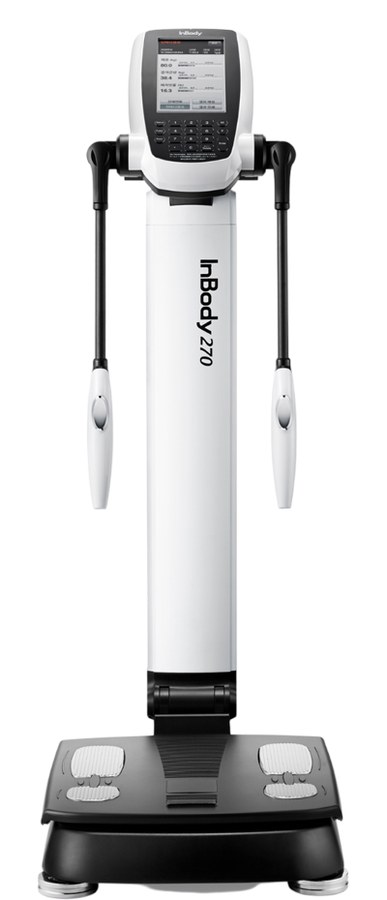
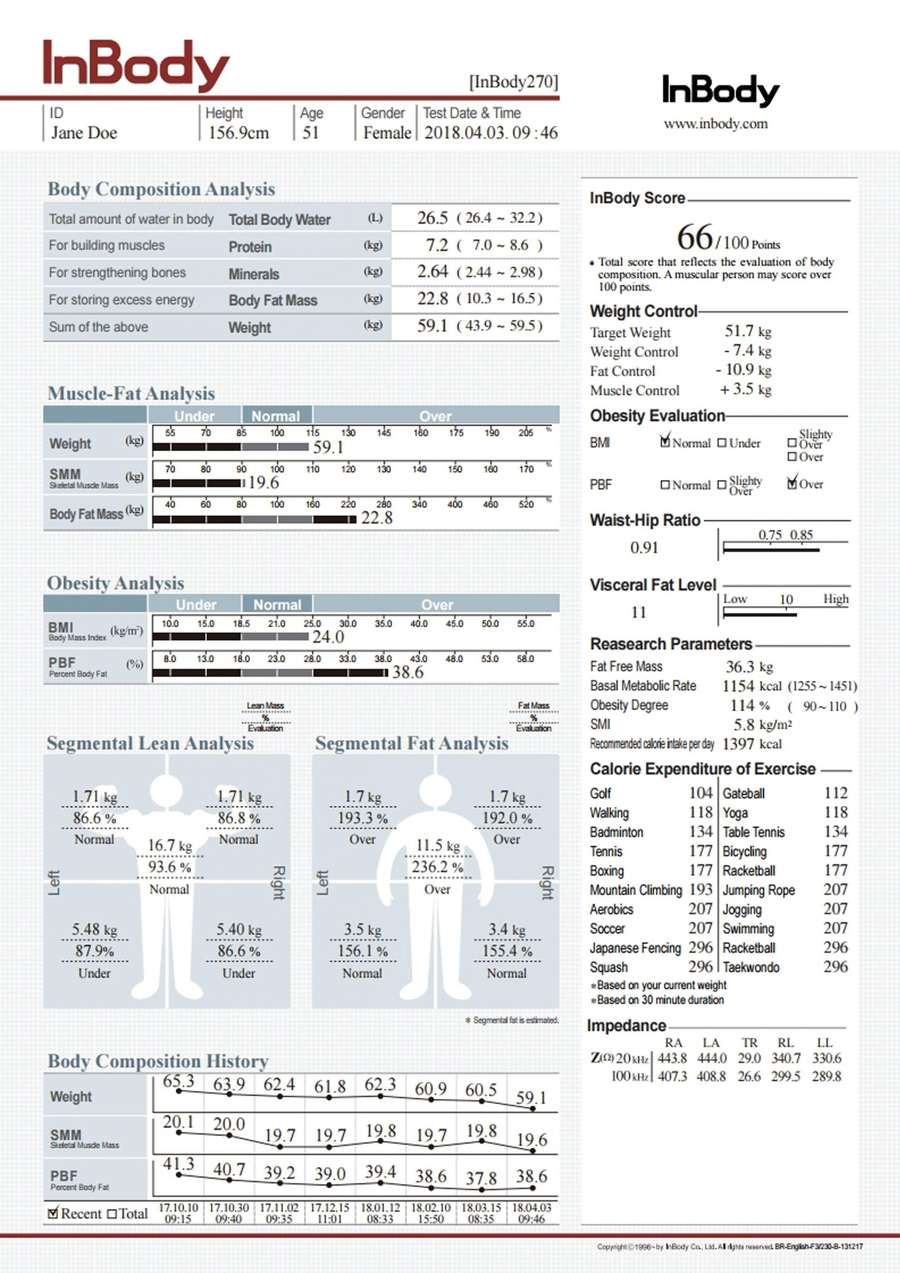
To be precise: an InBody scan does not measure vitamin D. Vitamin D status can only be confirmed with a blood test (25-hydroxyvitamin D). What InBody testing shows, with real precision, is the downstream physical consequence — Skeletal Muscle Mass (SMM) tracked over successive tests, alongside your InBody Score and segmental muscle distribution.
The pattern to watch for will feel familiar to readers of this blog’s testosterone and sarcopenia articles, because vitamin D deficiency can produce a similar signature:
- SMM that plateaus or drifts downward across repeat tests, despite a training log showing consistent sessions and no obvious lapse in effort
- Strength gains that stop progressing even as training volume and intensity are maintained or increased
- Slower-than-expected recovery between sessions and a low-grade fatigue that doesn’t track with sleep or workload
- An InBody Score that stagnates even when body fat and diet are both being actively managed
Any one of these has multiple possible causes — inadequate protein, poor sleep, overtraining, low testosterone, and thyroid dysfunction all sit in overlapping territory with vitamin D deficiency, and several can coexist. That’s the point of a body composition report as a prompt rather than a diagnosis: a stagnant SMM trend despite consistent training is a legitimate reason to check blood-level vitamin D, rather than assuming effort alone will break the plateau.
What to Actually Do About It
- Get sensible, direct sun — not incidental sun. A window or car ride doesn’t count; UVB doesn’t pass through glass, and clothing blocks it almost entirely. Roughly 15–30 minutes of midday sun on bare arms, legs, and back, before sunscreen, a few times a week, is the commonly cited target — adjusted for how quickly your skin burns.
- Build in vitamin D-relevant foods, even though diet alone rarely closes a real deficiency. Fatty fish (mackerel/bangda, sardines, salmon), egg yolks, and UV-exposed mushrooms are the strongest natural sources. Look for the FSSAI “F+” logo on fortified edible oil and toned milk — India’s voluntary fortification programme, added precisely because diet alone isn’t adequate for most Indians.
- Get an actual blood test rather than guessing. A 25-hydroxyvitamin D test costs roughly ₹800–₹1,800 at Indian diagnostic labs, often with home collection — the only way to know your real status. Supplementing or “getting more sun” without a baseline number means managing blind.
- Don’t self-prescribe a supplementation dose. Vitamin D is fat-soluble — excess is stored, not excreted — so high-dose self-supplementation over long periods carries a genuine, if uncommon, toxicity risk. The right replacement dose depends on your blood test result and factors only a physician can assess. Make it a doctor’s conversation, not a pharmacy-shelf decision.
- Keep training — correction supports muscle building, it doesn’t replace it. Vitamin D appears to amplify the same anabolic pathways resistance training and protein already activate. Correcting a deficiency without training won’t build the muscle a stagnant InBody Score is asking for.
- Re-test on a sensible cycle. A repeat blood test (typically after 8–12 weeks, on your doctor’s guidance) confirms whether levels are moving, and a repeat InBody test over the same window shows whether SMM and InBody Score are responding alongside it.
Frequently Asked Questions
Can vitamin D deficiency really cause muscle weakness even if I train regularly?
Yes. Skeletal muscle contains vitamin D receptors, and vitamin D directly supports muscle protein synthesis through the same Akt/mTOR pathway resistance training activates. A deficiency doesn’t stop training from working, but it can blunt how efficiently training and protein convert into muscle gain — showing up as a stalled Skeletal Muscle Mass trend on repeat body composition tests.
Why is vitamin D deficiency so common in India if there’s so much sunshine?
Because sunshine availability and actual synthesis aren’t the same thing. Indoor hours, air pollution that scatters UVB, higher melanin requiring longer exposure, clothing coverage, and sunscreen use all reduce usable UVB reaching the skin. Urban Indians show markedly lower vitamin D than rural adults in the same region, pointing to lifestyle, not latitude, as the main driver.
Does InBody testing measure vitamin D levels?
No. InBody testing measures muscle mass, fat mass, and water distribution — not vitamin D or any blood marker. It can flag a pattern, such as stagnant or declining Skeletal Muscle Mass despite consistent training, worth investigating with a blood test, since vitamin D deficiency is one of several checkable causes.
What is a normal vitamin D level, and how do I get tested?
Vitamin D status is confirmed with a 25-hydroxyvitamin D blood test, available at Indian diagnostic labs for roughly ₹800–₹1,800, often with home collection. Your report classifies the result as deficient, insufficient, or sufficient against standard reference ranges; your doctor is best placed to interpret it alongside your symptoms and history.
Can I just take vitamin D supplements without a blood test?
Not advisable. Vitamin D is fat-soluble — the body stores excess rather than excreting it — so long-term high-dose self-supplementation carries a real toxicity risk. Since the right replacement amount depends on how deficient you actually are, a blood test first plus a doctor’s guidance on dosing is the safer approach.
How long does correction take to show up in muscle mass or strength?
Clinical trials typically measure outcomes over 8–12 weeks or longer, with improvements most measurable in lower-body strength (quadriceps) rather than grip strength. Pairing correction with resistance training, and tracking SMM on repeat InBody tests over a similar window, gives a realistic picture of whether it’s translating into muscle change for you.
Check the Number the Sunshine Can’t Guarantee
India’s sunlight is abundant. Your vitamin D status is not guaranteed by it — and if your Skeletal Muscle Mass has stalled despite consistent training, a vitamin D blood test is a simple, inexpensive place to look for a correctable cause.
Start with the number you can actually track. Book an InBody body composition test at inbody.in/inbody-test.php to get a precise Skeletal Muscle Mass baseline, then combine it with a vitamin D blood test and your doctor’s guidance to check whether an unexplained plateau has a fixable cause. Related reading: how sarcopenia accelerates muscle loss in Indian adults after 35, how declining testosterone shows up on an InBody report, and the body composition guide to staying strong after 60.

Most trending articles

वज़न बढ़ाने के लिए क्या खाएं? सही डाइट प्लान (सिर्फ ज़्यादा खाना नहीं)
सिर्फ ज़्यादा खाने से मांसपेशी नहीं बनती, चर्बी बढ़ सकती है। सही कैलोरी सरप्लस, प्रोटीन और डाइट प्लान जो वज़न को सही तरीके से बढ़ाए — पूरी जानकारी हिंदी में।
भारत में प्रोटीन कितना ज़रूरी है? असली आंकड़े और सही फॉर्मूला
IMRB के एक सर्वे में लगभग 73% भारतीय आहार प्रोटीन-कम पाए गए। सही प्रोटीन टारगेट कैसे निकालें और किन फूड्स से पूरा करें — पूरी जानकारी हिंदी में।
Metabolic Age क्या होती है? आपकी उम्र से ज़्यादा है या कम?
आपकी असली उम्र 34 है पर शरीर 50 साल जैसा व्यवहार कर सकता है। Metabolic age क्या है, मांसपेशी घटने के जोखिम क्या हैं और इसे कैसे घटाएं — पूरी जानकारी।