
Fitness 12 min read
Fasting for Navratri or Ekadashi? You Might Be Losing Muscle, Not Fat (Here’s What Body Composition Data Shows)
Ramadan fasting research shows nearly a third of weight lost is muscle, not fat. Here's how to protect muscle during Navratri, Ekadashi, and Ramadan fasts.
Reading about body composition? Find an InBody test centre near you →
Fasting for Navratri? The Scale Barely Moved — But Something Still Feels Off
Nine days of Navratri fasting end, and you step on the scale expecting a number that matches the effort. Instead: barely a kilo down. Yet your arms look smaller, your jeans sit differently at the waist in a way that doesn’t read as “leaner,” and climbing the same flight of stairs you’ve climbed for years suddenly leaves you winded. You didn’t lose much weight. You may have lost muscle.
This is one of the least-discussed risks of religious and festival fasting in India — not just Navratri, but Ekadashi’s twice-monthly fasts, and Ramadan’s month of sunrise-to-sunset abstention observed by roughly 200 million Indian Muslims. Multi-day and recurring fasts are woven into Indian life at a scale most countries don’t have. But the physiological reality of an extended or repeated fast — especially one built around carbohydrate-heavy, low-protein “fasting foods” — is that the body doesn’t always draw energy exclusively from fat. Under the wrong conditions, it draws from muscle too.
This is a different question from the one everyone is already asking about 16:8 intermittent fasting. Daily time-restricted eating compresses a normal day’s food into a shorter window; total intake over 24 hours barely changes. Multi-day festival fasting is a different physiological event — sustained low intake, or a sustained shift toward foods that are fundamentally short on protein, stacked over days rather than hours. The mechanism is real, measurable, and almost entirely preventable once you understand what’s actually happening.

What Multi-Day Fasting Actually Does Inside Your Body
The body’s fuel-switching sequence during fasting is well mapped. Liver glycogen — the fast-access reserve your body taps first — is essentially depleted within 24 to 36 hours of reduced food intake. Muscle glycogen is more stubborn: research on extended fasting shows it drops by only around 20–30% after three full days without adequate carbohydrate intake. Once liver glycogen runs low, the body needs another source of glucose, and it turns increasingly to protein breakdown to fuel gluconeogenesis — the process of manufacturing glucose from non-carbohydrate sources, muscle tissue among them.
How much of that protein comes from your own muscle depends heavily on what you’re eating and doing during the fast. At the extreme end, a controlled study of complete seven-day fasting (zero caloric intake) found that participants lost an average of 4.6kg of lean mass against just 1.4kg of fat mass over the week — even though their maximal strength stayed largely intact, because muscle tissue can shrink measurably before strength output actually drops. That’s the trap: you can lose real muscle mass and still lift the same weight or climb the same stairs for a while, which is exactly why the loss goes unnoticed until it’s already happened.
Almost nobody in India does a true seven-day zero-calorie fast for religious observance — even the strictest Navratri vrat typically involves some fruit, milk, or water. But the same mechanism operates on a smaller scale whenever intake is reduced and protein specifically is scarce, which is precisely the profile of a typical Indian festival-fasting diet.
Ramadan gives us the largest, best-studied real-world data on this, since roughly a fifth of the world’s Muslims fast for a full month every year. A systematic review and meta-analysis pooling data from 90 comparison groups and nearly 3,000 participants found Ramadan fasting produced an average weight loss of about 1.24kg over the month (1.51kg in men, 0.92kg in women) — and that the accompanying loss in fat-free mass (which includes muscle) was significant, running only around 30% smaller than the loss in fat mass. For roughly every 3kg lost as fat, close to 2kg came from lean tissue. Encouragingly, body composition tends to drift back toward baseline within 2–5 weeks after Ramadan ends, provided normal eating and activity resume. The real risk isn’t any single festival — it’s Navratri, Ekadashi, and other fasts recurring multiple times a year without ever correcting the protein gap.
India Fasts More Than Almost Any Country in the World
Religious and festival fasting isn’t a niche practice here — it’s mainstream. Navratri is observed twice a year (Chaitra and Sharad Navratri), each a 9-day fasting cycle for millions of devotees across most Indian states. Ekadashi falls twice every lunar month, observed by a large population of Hindus nationwide — some households are fasting, in some form, roughly 24 times a year. Ramadan is observed with near-universal consistency: a 2023 industry survey found 99% of Muslims in India fast during the month, out of a population of roughly 200 million.
Layer these together and India likely has more fasting days, across more of its population, than almost any other country. A single festival’s worth of lean-tissue loss might be trivial on its own — but repeated several times a year, for decades, on top of the age-related muscle decline every adult already faces after their mid-30s, the arithmetic stops looking trivial.
The Navratri Plate Problem: Heavy on Carbs, Light on Protein
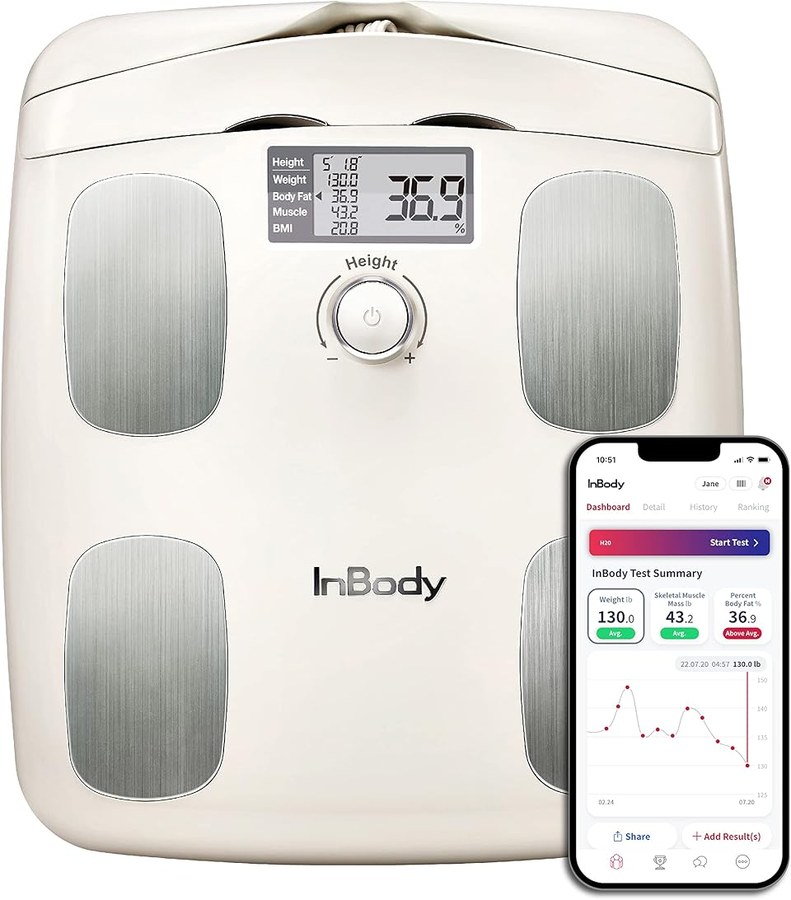
The issue isn’t fasting itself — it’s what’s on the fasting plate. Traditional Navratri vrat food deliberately excludes regular grains, cereals, and pulses for religious reasons, replacing them with a specific set of permitted ingredients: sabudana (tapioca pearls), kuttu atta (buckwheat flour), singhara atta (water chestnut flour), potatoes, fruit, and dairy. Several of these are excellent sources of quick energy. Almost none of them are meaningful protein sources on their own.
| Fasting-friendly food | Protein per 100g | What it’s good for |
|---|---|---|
| Sabudana (tapioca pearls) | Negligible | Fast carbohydrate energy; low in both fat and protein |
| Singhara atta (water chestnut flour) | Low | Carbohydrate energy, fibre, potassium — not a protein source |
| Kuttu atta (buckwheat flour) | ~13.3g | The one fasting flour with real protein content |
| Makhana (fox nuts) | ~9.7g | High-volume, low-fat snacking protein |
| Roasted peanuts | ~25.8g | The highest-protein ingredient already in your fasting kitchen |
| Paneer | ~18–20g | The single best protein anchor for a vrat meal |
| Plain curd (dahi) | ~3.5g | Complete protein, but low in density — needs volume |
Look at that table and the pattern is obvious: sabudana khichdi, singhara halwa, and fried potato preparations — the default Navratri meals in most homes — are carbohydrate-dense and protein-poor. Meanwhile the two best protein sources already permitted during the fast, peanuts and paneer, are frequently used as garnish rather than the centrepiece of the meal. The fast isn’t the problem. The composition of the fasting plate is.
Why the Scale Can’t Tell You What You Actually Lost
This is the crux of the body composition argument. A bathroom scale — or a BMI calculation — measures total mass. It cannot distinguish a kilo of fat from a kilo of muscle from a kilo of water. During restricted eating, all three shift at once, and not always in the direction you’d assume:
- Glycogen-bound water drops fast. Each gram of glycogen is stored with roughly 3 grams of water, so the “weight loss” in the first two to three days of any fast is disproportionately water leaving with depleted glycogen — not fat.
- Fat loss is real but often modest — smaller than the scale drop suggests, per the Ramadan data above.
- Muscle loss is invisible on a scale. A 3kg drop that’s 2kg fat and 1kg muscle looks identical to a 3kg drop that’s 0.5kg fat and 2.5kg muscle. Same number, completely different outcome.
- Rehydration after a fast can mask what happened. Especially after Ramadan’s water restriction, the days right after the fast often show a rebound in body water that further scrambles the reading.
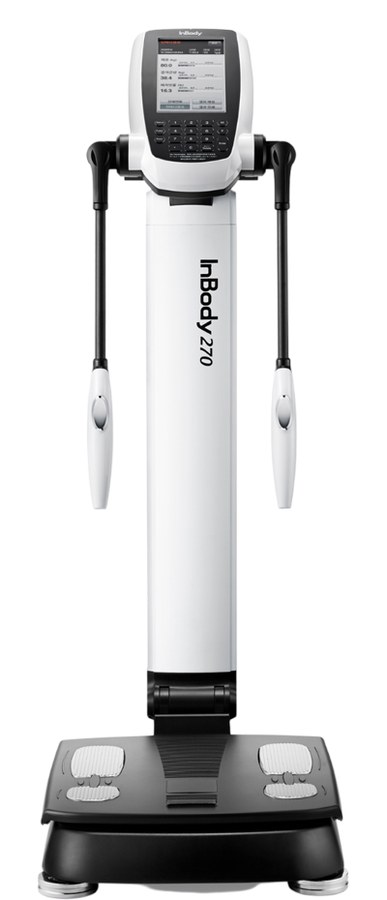
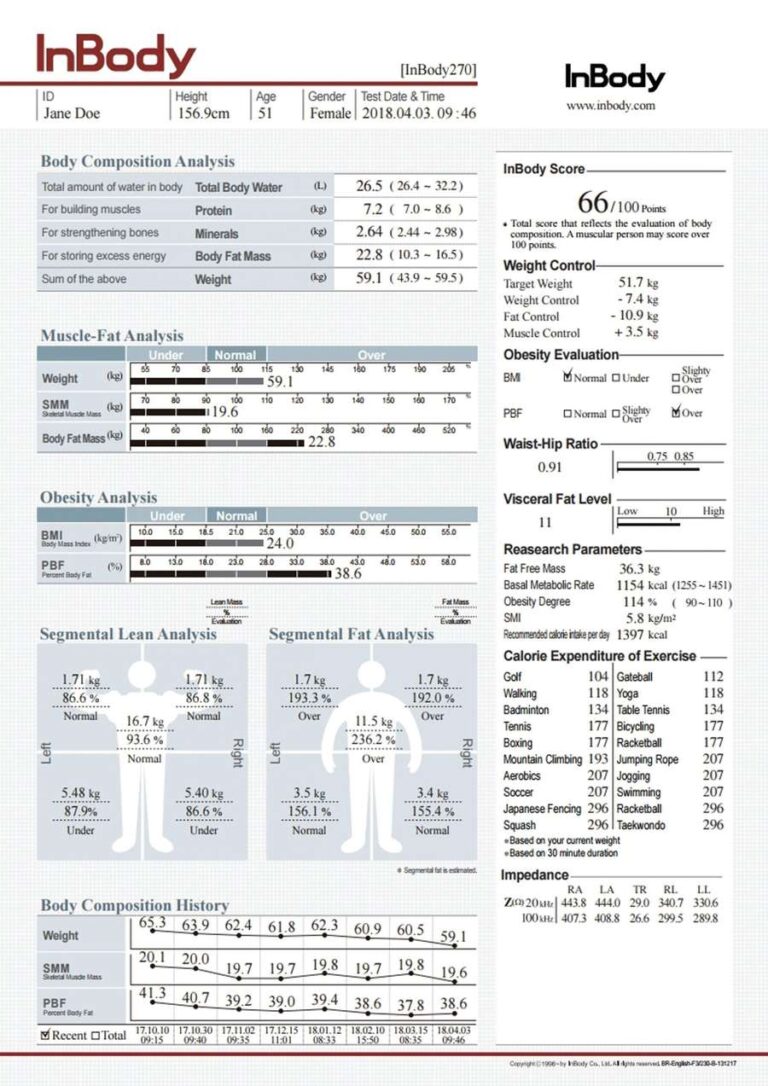
A body composition scan resolves this directly. An InBody assessment separates Skeletal Muscle Mass (SMM), Percent Body Fat (PBF), and body water distribution (via the ECW/TBW ratio) into distinct numbers instead of one blended figure. Scanned before Navratri begins and again after it ends, the comparison shows immediately whether the 9 days moved fat, muscle, or mostly water — information no scale, tape measure, or mirror check can give you.
How to Fast for Navratri, Ekadashi, or Ramadan Without Losing Muscle
None of this is an argument against fasting. It’s an argument for fasting deliberately. The following adjustments work within the traditional rules of vrat and phalahar food — nothing here requires eating outside what’s permitted.
1. Make paneer and peanuts the centre of the plate, not the garnish
Paneer delivers roughly 18–20g of protein per 100g and peanuts around 25.8g per 100g — both comfortably permitted during Navratri fasting. A vrat meal built around a generous portion of paneer, or sabudana khichdi loaded with extra peanuts rather than a token handful, closes most of the protein gap without breaking any dietary rule.
2. Use kuttu and makhana as your protein-bearing carbs
Among permitted fasting flours, kuttu atta stands out with roughly 13.3g of protein per 100g — meaningfully higher than sabudana or singhara atta. Roasted makhana, at close to 9.7g per 100g, is a far better snack during a fast than fried potato chips, which offer calories and little else.
3. Don’t let dairy be an afterthought
Milk, curd, and paneer are permitted through most Navratri and Ekadashi traditions and are the most reliable protein anchors available. Plain curd is only around 3.5g of protein per 100g, so it needs real volume — a small katori isn’t doing much; a full bowl, or curd blended into a lassi with nuts, moves the needle further.
4. Keep some resistance stimulus during the fasting period
Muscle protein synthesis needs a signal to hold onto tissue, not just fuel. You don’t need a heavy gym session on an empty stomach — even light resistance work during a Navratri fast, or in the hours after Iftar during Ramadan, gives the body a reason to preserve muscle rather than treat it as spare fuel.
5. Time your protein around when you can actually eat
For Ramadan’s structure, the two meals that matter are Suhoor (pre-dawn) and Iftar (after sunset). Anchoring both with a real protein source — eggs, dairy, legumes, meat or fish where eaten — rather than starting Iftar purely with fried snacks and sugary drinks gives the body amino acids to work with across the full cycle, not just carbohydrates.
6. Watch hydration, especially where water is also restricted
Ramadan’s daytime water restriction is a different physiological load than Navratri’s food restriction, and dehydration itself can distort both performance and scale readings. Rehydrating steadily after sunset — rather than in one large burst — supports nutrient absorption and reduces the water-weight swings that make it harder to judge what a fast is actually doing to your body.
Frequently Asked Questions
Does fasting during Navratri actually cause muscle loss?
It can, particularly if the fast runs multiple days with low protein intake. Once liver glycogen depletes (within 24–36 hours) the body increasingly draws on protein — including muscle tissue — to fuel gluconeogenesis. Whether this happens to a meaningful degree during your specific fast depends heavily on how much protein-rich food (paneer, curd, peanuts, kuttu) you’re eating during the permitted meals.
Is sabudana khichdi bad for muscle preservation while fasting?
Sabudana itself is low in both fat and protein, so a plate of plain sabudana khichdi offers fast energy but almost no muscle-preserving nutrition. It isn’t “bad,” but it shouldn’t be the only source of calories during a multi-day fast. Adding a generous quantity of peanuts (roughly 25.8g protein per 100g) to the same dish meaningfully improves its protein content without breaking fasting rules.
Can I do resistance training while fasting for Navratri or Ramadan?
Yes, and it’s one of the more effective things you can do to protect muscle during a fast. Light-to-moderate resistance work signals the body to preserve muscle tissue rather than break it down for fuel. For Navratri, train in whichever window your energy is highest. For Ramadan, most people find light training in the hours after Iftar, once some food and fluids are on board, more sustainable than training during the fasting window itself.
Does Ramadan fasting cause muscle loss, according to research?
A meta-analysis pooling data from nearly 3,000 participants found that Ramadan fasting produces an average weight loss of about 1.24kg over the month, and that the accompanying loss in fat-free mass (which includes muscle) was statistically significant — running only around 30% smaller than the loss in fat mass. The same research shows body composition typically drifts back toward baseline within 2–5 weeks after Ramadan ends, provided normal eating and activity resume.
How much protein should I eat during a multi-day religious fast?
ICMR-NIN’s 2020 dietary guidelines set the RDA for healthy Indian adults at 0.83g of protein per kg of body weight per day, rising to around 1g/kg for people on predominantly cereal-based (lower-quality protein) diets — which describes most traditional fasting menus. For a 60kg adult, that’s roughly 50–60g of protein per day even during a fast, ideally split across whichever meals the fast permits.
Why didn’t my weight change much during Navratri if I’m eating so much less?
Scale weight during any fast reflects a mix of glycogen-bound water loss (each gram of glycogen is stored with roughly 3 grams of water), genuine fat loss, and — if protein intake was low — some muscle loss. These can offset each other on the scale even when real, meaningful changes are happening inside your body. A body composition scan is the only way to see which of the three actually moved.
Will a body composition test show if I lost muscle during a fast?
Yes. An InBody assessment separates Skeletal Muscle Mass, Percent Body Fat, and body water distribution into distinct readings rather than one blended number. Scanned before and after a fasting period like Navratri or Ramadan, it shows precisely whether the change on your scale came from fat, muscle, or water — something no bathroom scale or BMI calculation can tell you.
Know What You’re Losing Before You Fast Again
Navratri comes around twice a year, Ekadashi twice a month, Ramadan every year. None of that is going to change, nor should it — these are meaningful traditions, not problems to be solved. What can change is whether each fast quietly costs you muscle you’ll spend months rebuilding, or does what it’s meant to do without that hidden cost.
The only way to know which is happening is to measure it. A baseline InBody scan before your next fasting period, and a follow-up scan after, shows exactly how your Skeletal Muscle Mass, body fat percentage, and water balance moved — replacing guesswork with data.
Book an InBody test before your next fast to get your baseline SMM, PBF, and ECW/TBW ratio — and scan again afterward to see exactly what changed. For more on how daily eating-window fasting differs from festival fasting, read our guide to intermittent fasting and body composition in India. If protein intake is your main concern during fasting season, our protein powder guide for India breaks down which supplements are worth adding. And if you’re wondering how much muscle loss matters over the long run, see our piece on sarcopenia and age-related muscle loss in India.

Most trending articles

वज़न बढ़ाने के लिए क्या खाएं? सही डाइट प्लान (सिर्फ ज़्यादा खाना नहीं)
सिर्फ ज़्यादा खाने से मांसपेशी नहीं बनती, चर्बी बढ़ सकती है। सही कैलोरी सरप्लस, प्रोटीन और डाइट प्लान जो वज़न को सही तरीके से बढ़ाए — पूरी जानकारी हिंदी में।
भारत में प्रोटीन कितना ज़रूरी है? असली आंकड़े और सही फॉर्मूला
IMRB के एक सर्वे में लगभग 73% भारतीय आहार प्रोटीन-कम पाए गए। सही प्रोटीन टारगेट कैसे निकालें और किन फूड्स से पूरा करें — पूरी जानकारी हिंदी में।
Weight Loss या Fat Loss: असली फर्क क्या है?
वज़न घटना और चर्बी घटना एक चीज़ नहीं है। तेज़ी से वज़न घटाने पर मांसपेशी क्यों चली जाती है, और असली फर्क कैसे पता करें — हिंदी में पूरी जानकारी।